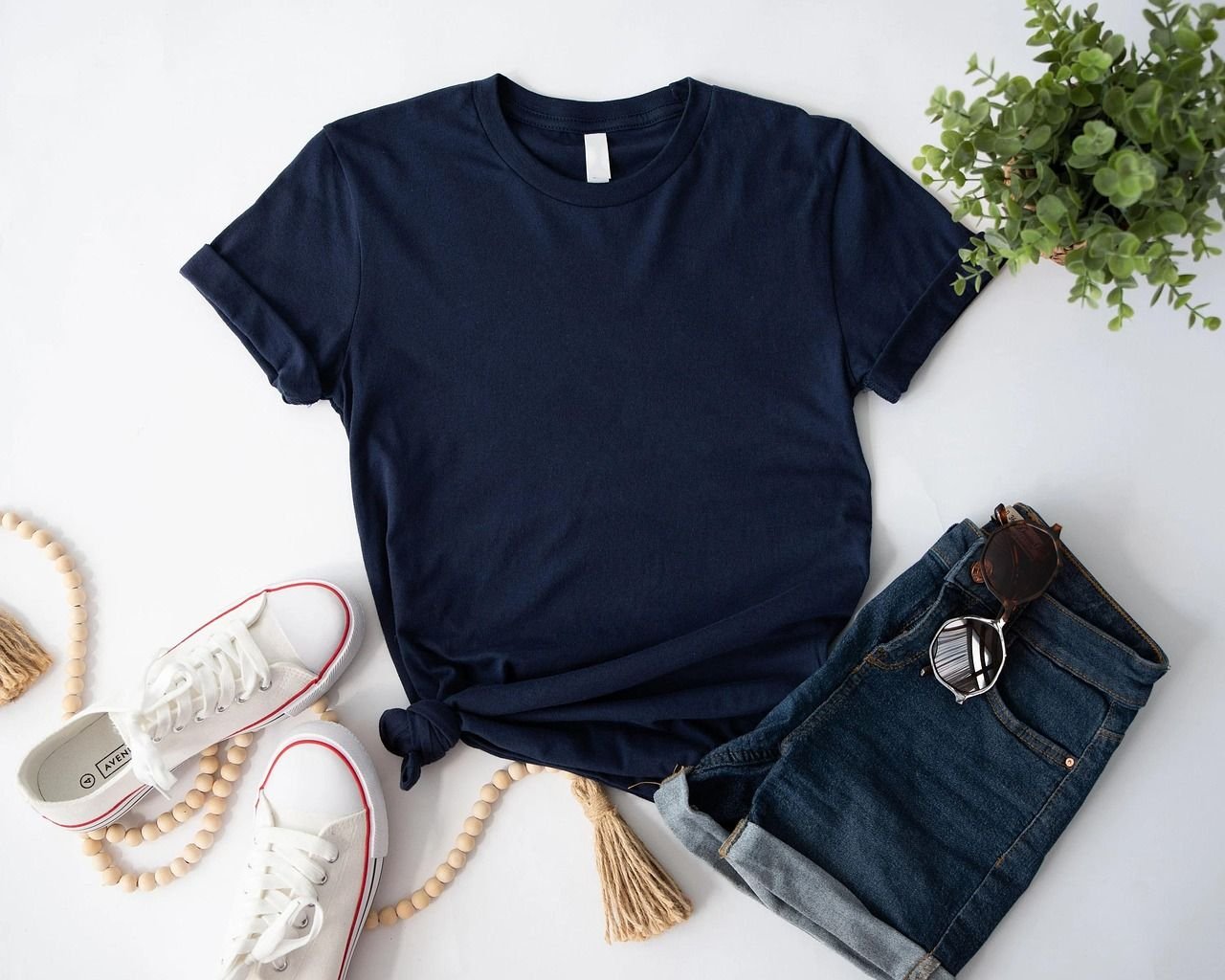
Minimalist aesthetic clothes are simple, well-fitting pieces in a small color palette that you can mix into many outfits. If you want to know how to achieve a minimalist aesthetic with your clothes, start with what you already own. Edit it, learn a few styling rules, and buy only what fills a gap. This guide is written for beginners in the USA. It explains what the look is, how to dress minimalist step by step, and how to make it work with real weather, real schedules and a real budget. It also includes a mix-and-match example so you can see how a small set of clothes turns into many outfits.
What Are Minimalist Aesthetic Clothes?
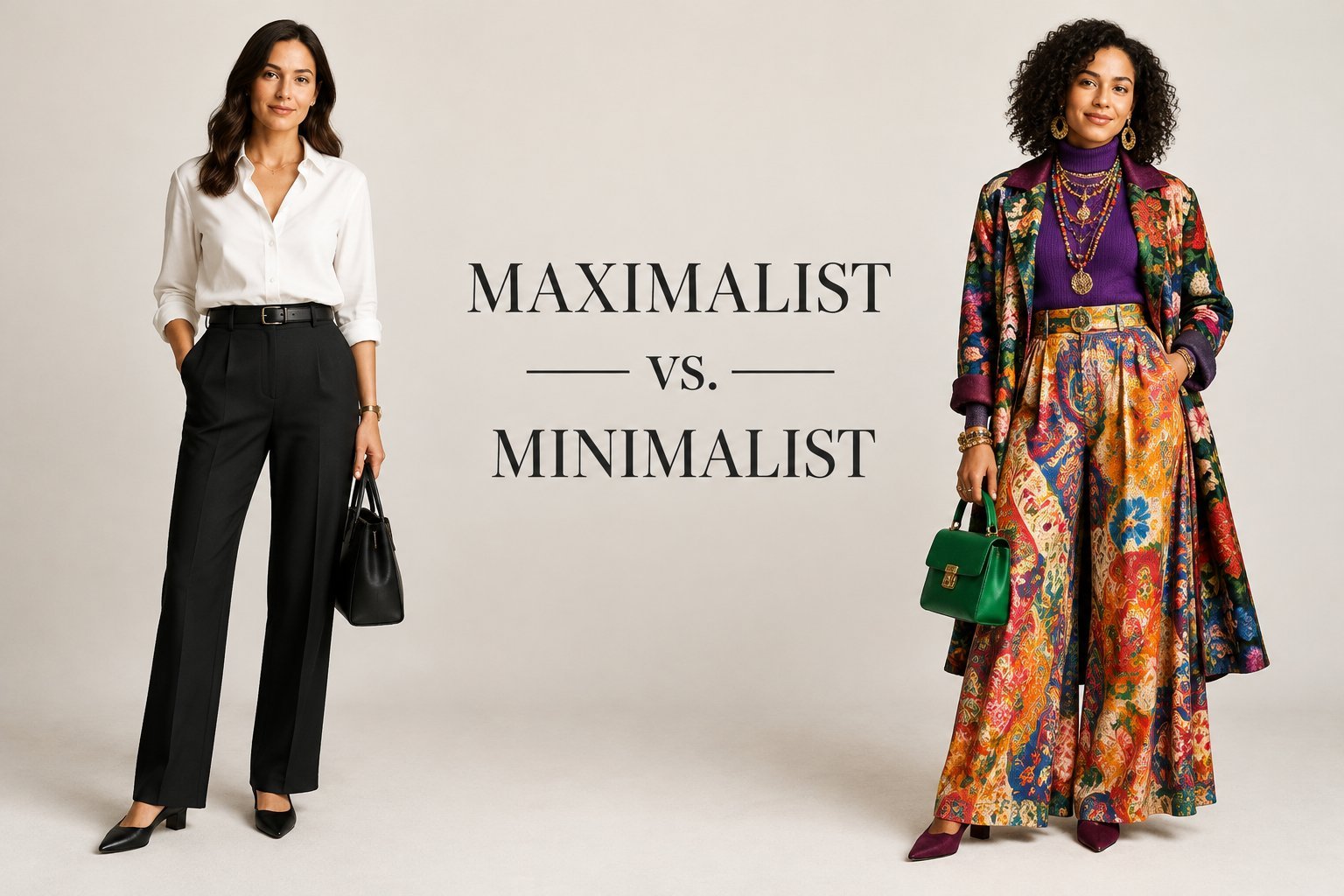
Minimalist aesthetic clothes have clean lines, limited colors and very little decoration. A plain tee, straight-leg trousers and a simple coat are typical examples. The goal is a calm, put-together look that doesn’t depend on logos, busy prints or constant trend changes.
You may also see “minimalist aesthetic” used for phone wallpapers, home decor and graphic design. This guide covers clothing and wardrobes only.
A minimalist look is not a fixed uniform. It does not require all beige, a set number of items, or expensive designer pieces. Three ideas matter more:
- Fewer choices, better combinations. Every piece should work with several others.
- Restraint. You skip extra details so the shape, fit and fabric stand out.
- Personal fit. The wardrobe suits your job, climate and daily routine.
The Five Elements of a Minimalist Look
Before you edit or shop, it helps to know what makes an outfit read as minimalist. These five elements do most of the work.
| Element | What to aim for | Example |
|---|---|---|
| Shape | Simple, uncluttered silhouettes | Straight trousers, crewneck sweater |
| Color | Two or three base colors plus one accent | Gray, black and ivory with olive |
| Texture | Variety within the same color family | Cotton tee, wool coat, leather shoes |
| Fit | Clothes sized for your body, not “almost right” | Hemmed trousers, shoulder seams in place |
| Restraint | Few logos, prints and trims | One detail per outfit at most |
Texture is the element beginners skip most often. When you limit color, texture keeps the outfit from looking flat. A gray cotton tee and a gray wool coat look different even though the colors match.
How to Achieve a Minimalist Aesthetic: Step by Step

Step 1: Decide What “Minimalist” Means for You
Start by writing down your real week. How many days do you work in an office, at home or on your feet? Do you have kids, a long commute or regular events? A minimalist wardrobe that ignores your routine will sit unworn.
Then collect a few images of outfits you like. Look for patterns: Are they mostly tonal? Do they use loose shapes or fitted ones? Do they include structured jackets or soft knits? Three or four repeated traits are enough to guide your choices.
Hypothetical scenario 1: Maya and the Saved Photos. Maya, 34, lives in Denver and spends most weekends hiking. She saves dozens of minimalist outfit photos showing cream linen shirts and tailored white trousers. She buys several pieces, then rarely wears them because they do not suit her lifestyle. She tries again with a different method. She looks at what she actually wore last month and finds mostly gray, black and olive outdoor-friendly clothes. She keeps those as her palette and builds a cleaner version of the same look.
The lesson: inspiration photos are useful only when they fit your real life. Use them to spot patterns, not to copy someone else’s wardrobe.
Step 2: Shop Your Closet First
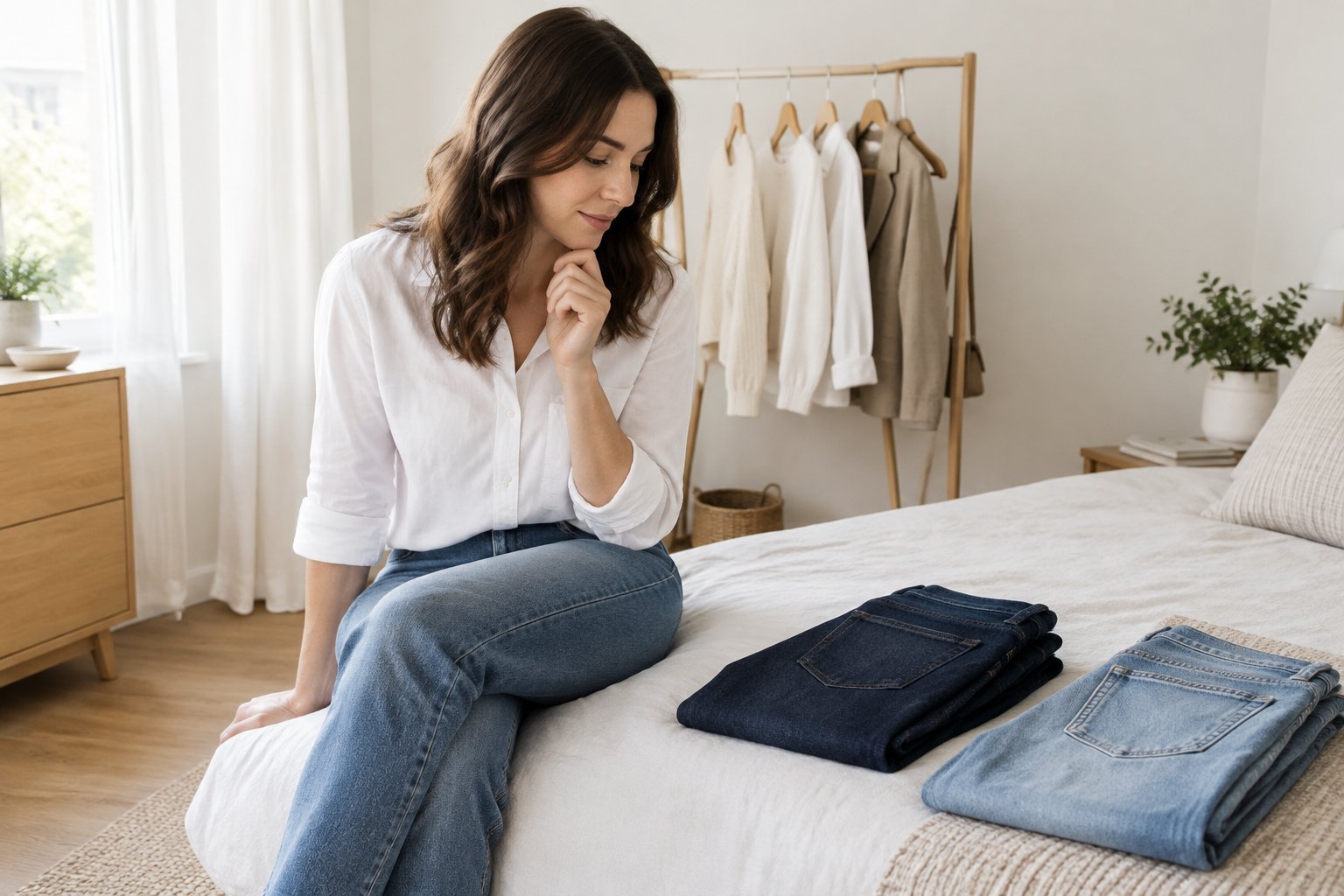
Before you buy anything, wear what you have for one to two weeks. Keep a short note on your phone listing what you reached for and what you ignored. At the end, sort your clothes into three groups:
- Keep: worn often, fits well, and goes with several other items.
- Test: you like it, but it needs a better partner, a tailor or a replacement.
- Release: doesn’t fit, doesn’t suit your life, or never leaves the hanger.
The “Test” group matters. A shirt you like but never wear may only be missing the right trousers. If a piece could work with a small fix, such as a hem or a button, give it that chance before you let it go.
For a ratio you can use when you sort what to keep, see this guide to the 70-30 rule for a minimalist wardrobe.
Step 3: Choose Your Palette
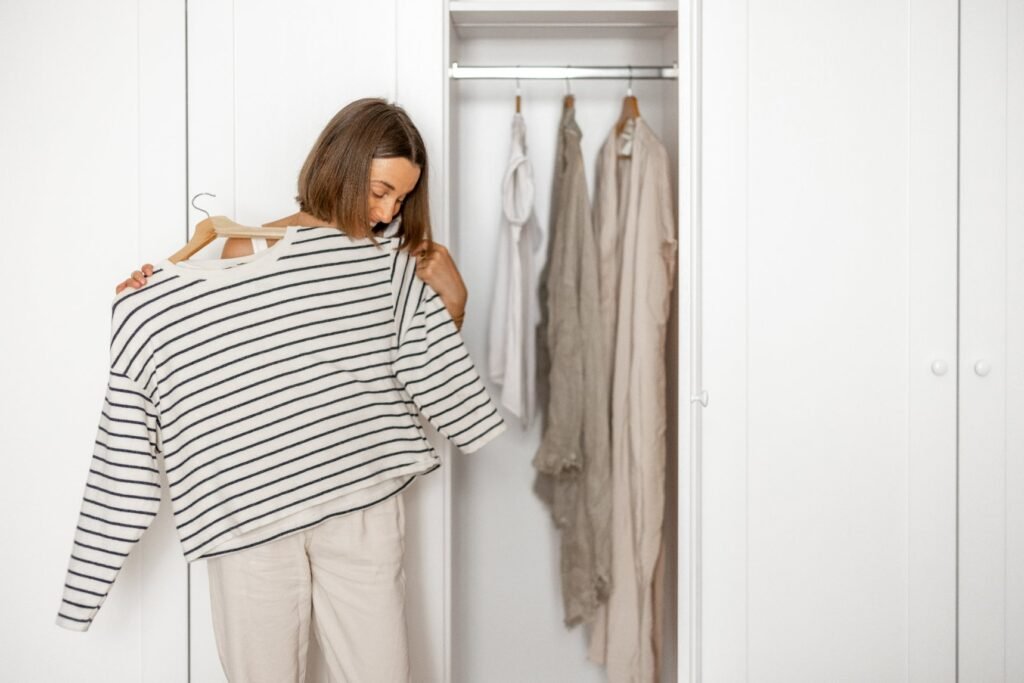
Pick two or three base colors and one or two accents. Base colors should be easy to pair, such as black, charcoal, gray, ivory, navy, tan or brown. Accents can be bolder, such as olive, rust or deep blue, and work best in smaller pieces.
Here are a few ways to choose:
- Count what you own. The colors that appear most in your “Keep” pile show your natural palette.
- Check your skin tone in daylight. Hold each color near your face. If you look tired or washed out, try a slightly different shade of that color.
- Include a dark, a light and a mid-tone. This gives you contrast without adding new colors.
- Limit patterns. A thin stripe or small check is easy to pair. A large, busy print is not.
If you like the look of one color head to toe, monochrome minimalist outfits show how to keep it interesting with texture.
Step 4: Learn How to Dress Minimalist With Fit and Fabric
Fit is the biggest difference between a minimalist outfit and a plain, forgettable one. Simple clothes show every flaw, so small details matter.
Check the fit:
- Shoulder seams sit at or near the edge of your shoulders.
- Sleeves and hems end where you chose them to end.
- Trousers are comfortable when you sit, bend and walk.
- Nothing pulls, gaps or needs constant adjusting.
A tailor can often fix hems and sleeve lengths, which can turn a nearly right garment into one you wear weekly.
Balance your shapes. If your top is loose, try fitted or straight bottoms. If your trousers are wide, a closer-fitting top often looks neater. You do not need to follow this every day, but it helps when an outfit looks off and you cannot say why.
Read the label before you buy. Check fiber content and care instructions. In the U.S., the FTC’s Care Labeling Rule requires manufacturers and importers to attach care instructions to garments. You can read the details in the FTC’s Clothes Captioning guide.
Be honest about your habits. A “dry clean only” blazer may suit someone who wears it twice a month, but not someone who needs machine-washable clothes every week.
Do not rely on price alone. WRAP, a UK waste-reduction charity, ran early trials on garment durability. Those trials suggested that price, fiber mix and fabric weight do not reliably predict how long clothes last, and WRAP is expanding its testing to the US, Canada and Europe. The results are preliminary, but they support a practical approach: check the stitching, try the item on, and look at how it handles wear before assuming a higher price means longer life.
Step 5: Build a Starter Wardrobe and Test Your Combinations
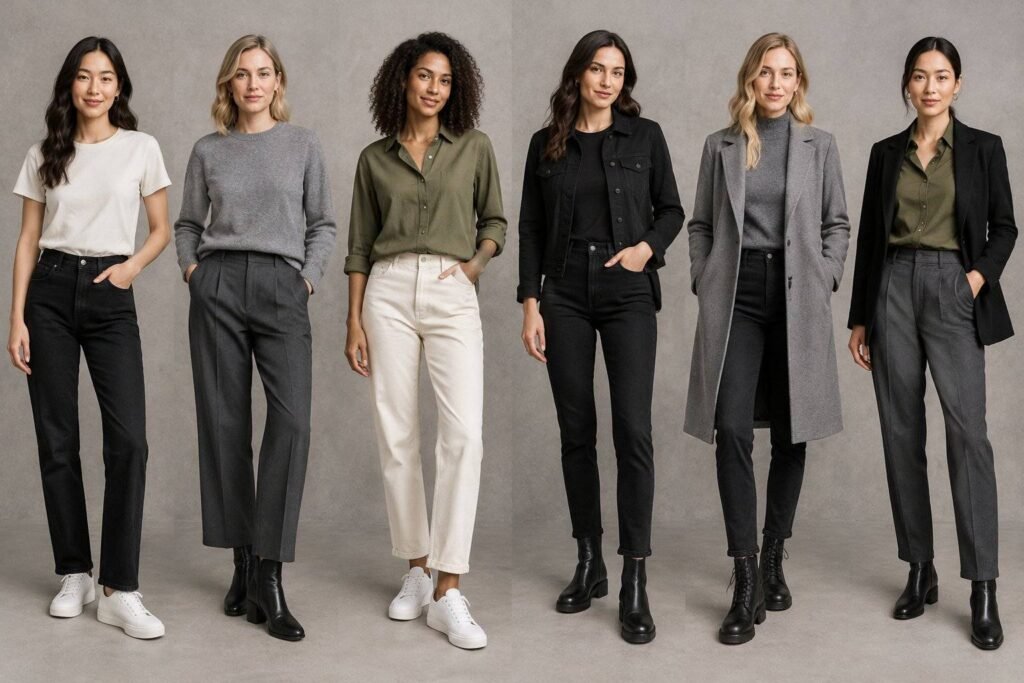
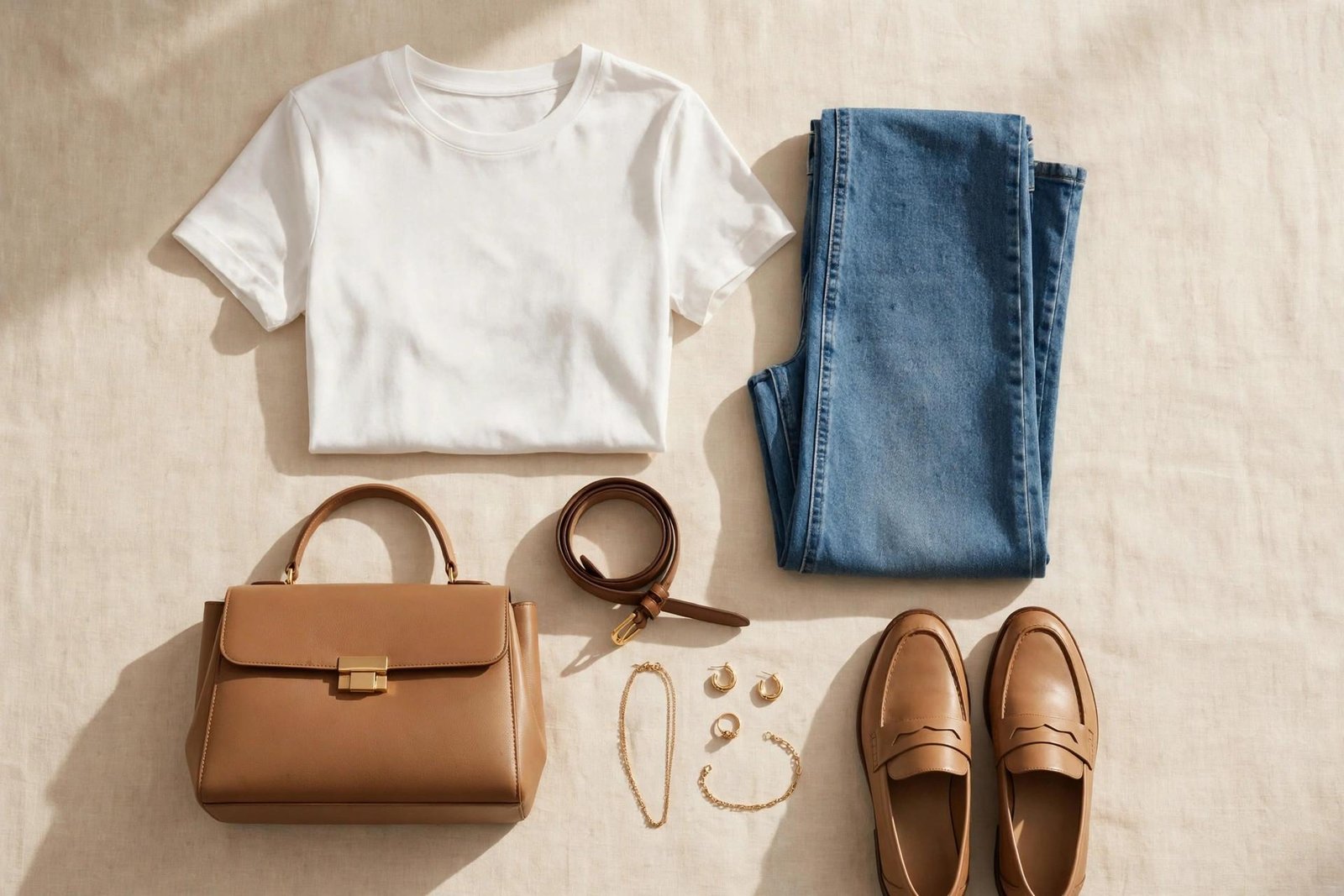
A small set of clothes makes the system easy to see. The example below is one way to build it. It is a pattern to copy, not a shopping list. The palette is ivory, gray, black and ecru (off-white), with olive as the accent.
| Category | Pieces |
|---|---|
| Tops (4) | Ivory tee, gray crewneck sweater, black long-sleeve tee, olive button-up shirt |
| Bottoms (3) | Black jeans, charcoal trousers, ecru chinos |
| Layers (2) | Black chore jacket, long gray wool-blend coat |
| Shoes (2) | White leather sneakers, black ankle boots |
That is 11 pieces. Four tops and three bottoms give 12 top-and-bottom pairings (4 × 3 = 12), and every pairing is wearable in this palette. The jacket, coat and two pairs of shoes multiply the number of looks further.
Here are six sample outfits that look distinct from each other:
| Outfit | Pieces | Best for |
|---|---|---|
| Weekday casual | Ivory tee, black jeans, white sneakers | Mild weather, relaxed workplace or errands |
| Office casual | Gray sweater, charcoal trousers, black boots | Cool indoor days |
| Weekend errands | Olive shirt, ecru chinos, white sneakers | Mild or warm days |
| Dark evening look | Black long-sleeve tee, black jeans, black jacket, boots | Dinner or a night out |
| Cold commute | Gray sweater, black jeans, gray coat, boots | Cold weather, walking or transit |
| Smart-casual dinner | Olive shirt, charcoal trousers, black jacket, boots | Dinner, a casual event |
Limits to keep in mind:
- Weather: This set covers mild to cold days. It has no hot-weather pieces, no rain jacket and no snow boots. The sweater and coat would be uncomfortable in summer heat, and the white sneakers are a poor choice for slush or heavy rain.
- Low contrast: The ivory tee with ecru chinos is light on light. It works better with a dark jacket or boots to add contrast.
- Occasion: The set suits casual and smart-casual settings. It does not cover formal events, athletic activity or a workplace with a strict dress code.
If you want help adapting a set to the seasons, these seasonal minimalist outfit ideas are a good next read.
Step 6: Make It Work for Real Life
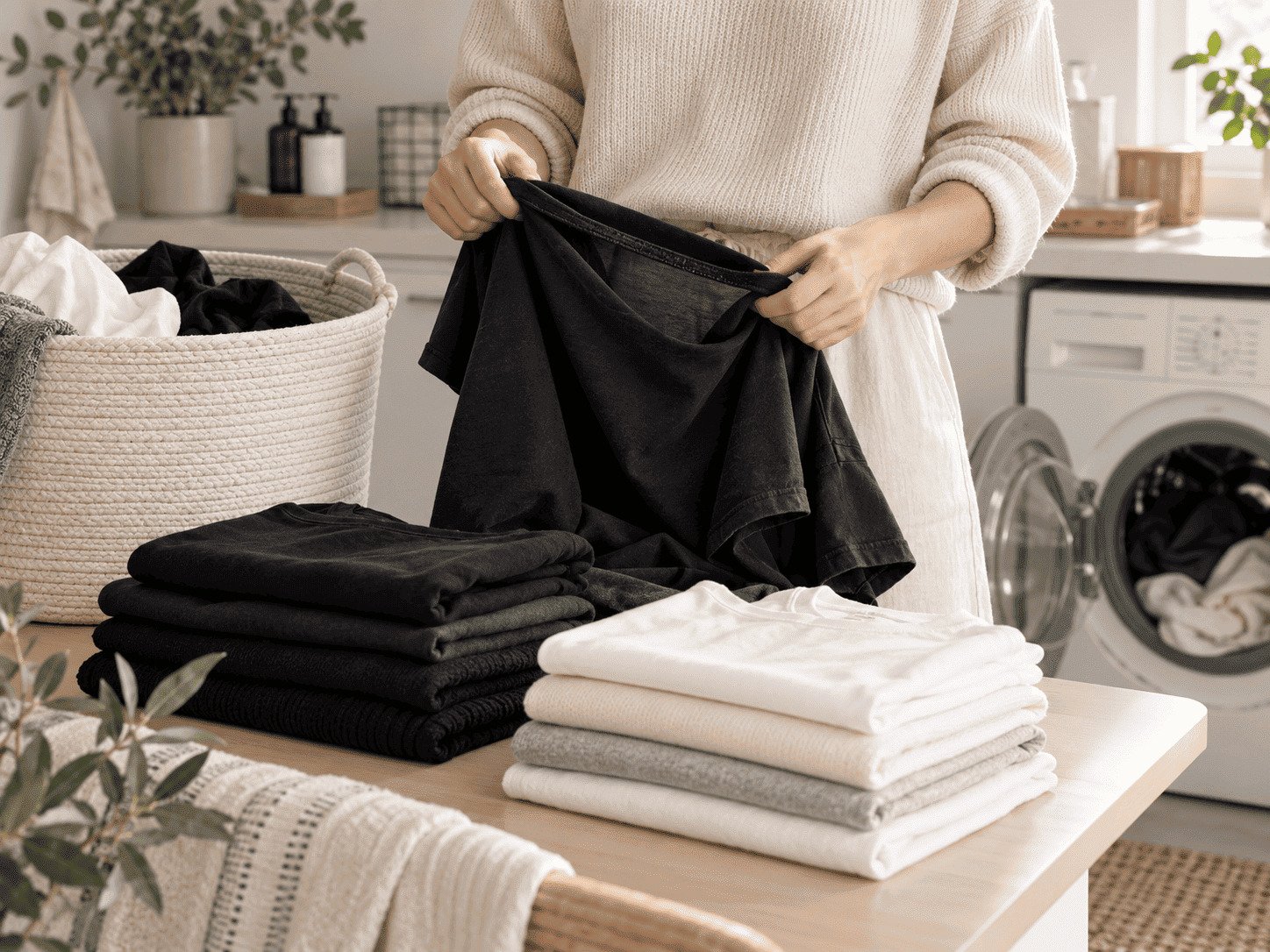
A minimalist look has to survive laundry, spills, commuting and comfort. If it does not, you will stop wearing it.
Hypothetical scenario 2: Elena’s Busy Weekdays. Elena has two young children and lives in suburban Atlanta. She wants a simple, polished look, but her clothes get spills and frequent washes. She starts by choosing machine-washable fabrics in mid and dark tones, which she finds easier to keep looking tidy. She also notices that she wears one pair of trousers constantly, so she buys a second pair in the same style rather than a new style she might not wear.
The lesson: repeating your best pieces is fine. A minimalist wardrobe is allowed to be practical, and owning duplicates of what works is often a smarter choice than adding variety for its own sake.
Step 7: Buy With a Plan and a Budget
Before you buy something new, ask yourself:
- Does it go with at least three things I already own?
- Does it fill a gap, or is it a duplicate?
- Does it fit my routine and climate?
- Can I care for it the way I normally care for my clothes?
- Can I wait a day or two? If you still want it, buy it.
For longer-term thinking, WRAP says extending clothing life has been identified as the single largest opportunity to reduce the carbon, water and waste footprints of clothing in the UK. That finding is from UK research, but the idea is practical anywhere: wearing what you already own for longer reduces how much you need to buy. You can read more on WRAP’s clothing design for longevity page.
Hypothetical scenario 3: Hannah’s Interview Plan. Hannah is a college senior in New York. She has an interview for an internship and wants to look polished without spending a lot. She has a dark pair of trousers that fit well and a plain white shirt. Instead of buying a full new outfit, she buys one blazer in a dark color that matches her trousers. She also gets her trousers hemmed so they sit properly with her shoes.
The lesson: tailoring and one targeted upgrade often beat buying a complete new outfit. For more ideas, see these minimalist fashion tips for students.
Quick Minimalist Fashion Tips for Beginners
- Start with one outfit formula you can repeat.
- Keep one accent color per outfit.
- Choose one texture contrast per outfit, such as wool with cotton or leather with knit.
- Wear each new piece three ways before you decide to keep it.
- Photograph outfits you like so you can repeat them without thinking.
- Review your wardrobe each season and remove what you no longer wear.
For a deeper look at the shopping side, minimalist shopping covers how to slow down your buying.
Common Mistakes to Avoid
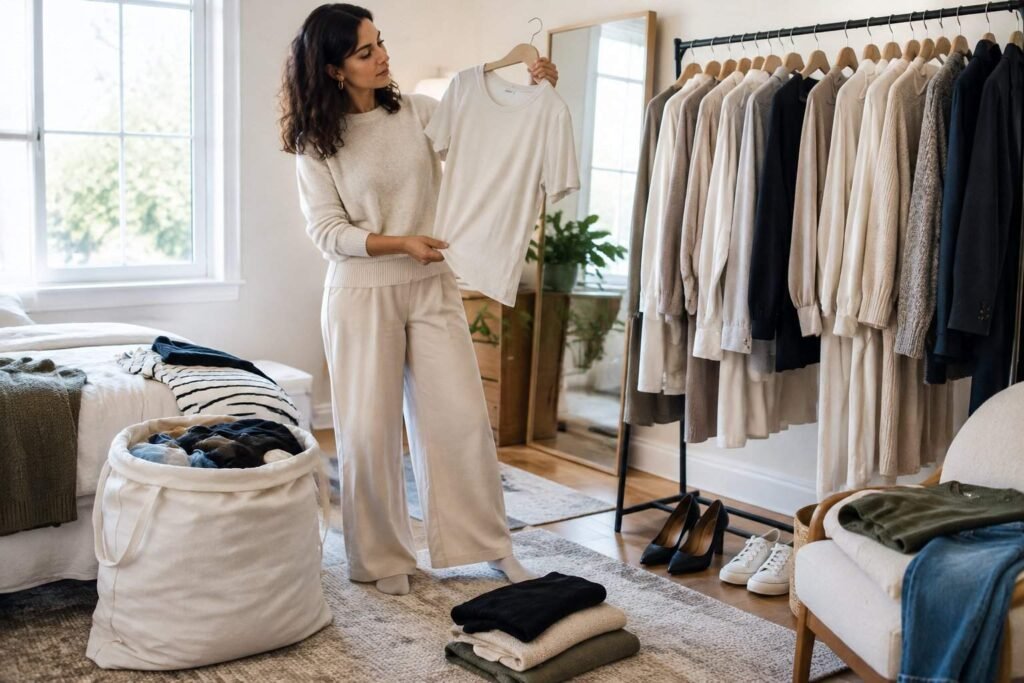
- Getting rid of too much too quickly. A “test” pile and a review date prevent regret and rebuying.
- Copying someone else’s capsule exactly. Their climate, job and body are not yours.
- Choosing a palette with no contrast. All-beige or all-gray outfits can look flat without texture or a darker accent.
- Ignoring comfort. If a fabric itches or a shoe hurts, you won’t wear it no matter how good it looks.
- Treating minimalism as a contest. There is no correct item count. The goal is a wardrobe that works for you.
- Buying “basics” without checking fit. A plain garment in the wrong size looks careless, not minimal.
FAQ
What is a minimalist aesthetic in fashion?
It is a style built on simple shapes, a limited color palette, good fit and few decorative details. It focuses on clothes that mix easily and look clean and intentional.
How do I start a minimalist aesthetic as a beginner?
Wear your current clothes for a week or two and note what you actually reach for. Then choose a small palette, fix fit problems and buy only to fill clear gaps.
How many clothes do I need for a minimalist wardrobe?
There is no set number. The 11-piece example above shows how mixing works, but your number depends on your climate, job, laundry routine and activities.
Can I wear dresses and skirts with a minimalist aesthetic?
Yes. The principles are the same: a small palette, good fit and simple shapes. You can swap pieces in the example set, such as chinos for a midi skirt or a straight-cut dress, as long as the colors and textures still work with the rest of your wardrobe.
Do I have to wear only neutral colors?
No. Neutrals are easy to mix, but you can build a minimalist look around deep green, rust or soft blue if you keep the palette limited and the shapes simple.
Is a minimalist aesthetic expensive?
It does not have to be. Wearing what you already own costs nothing, and slowing down your buying often reduces spending. If your budget is tight, our guide to building a minimalist wardrobe on a budget goes deeper.
Conclusion
Getting a minimalist aesthetic is a series of small, practical choices rather than a big wardrobe overhaul. Learn what you wear, choose a small palette, focus on fit and fabric, and test combinations before you buy. Adjust the system for your climate, schedule and budget so it works on ordinary days.
Start with your Keep pile and one outfit you can repeat this week. Small changes add up, and a calm, put-together look is easier to keep when it fits the life you actually live.
Which piece in your closet would make the best starting point for your minimalist look?