
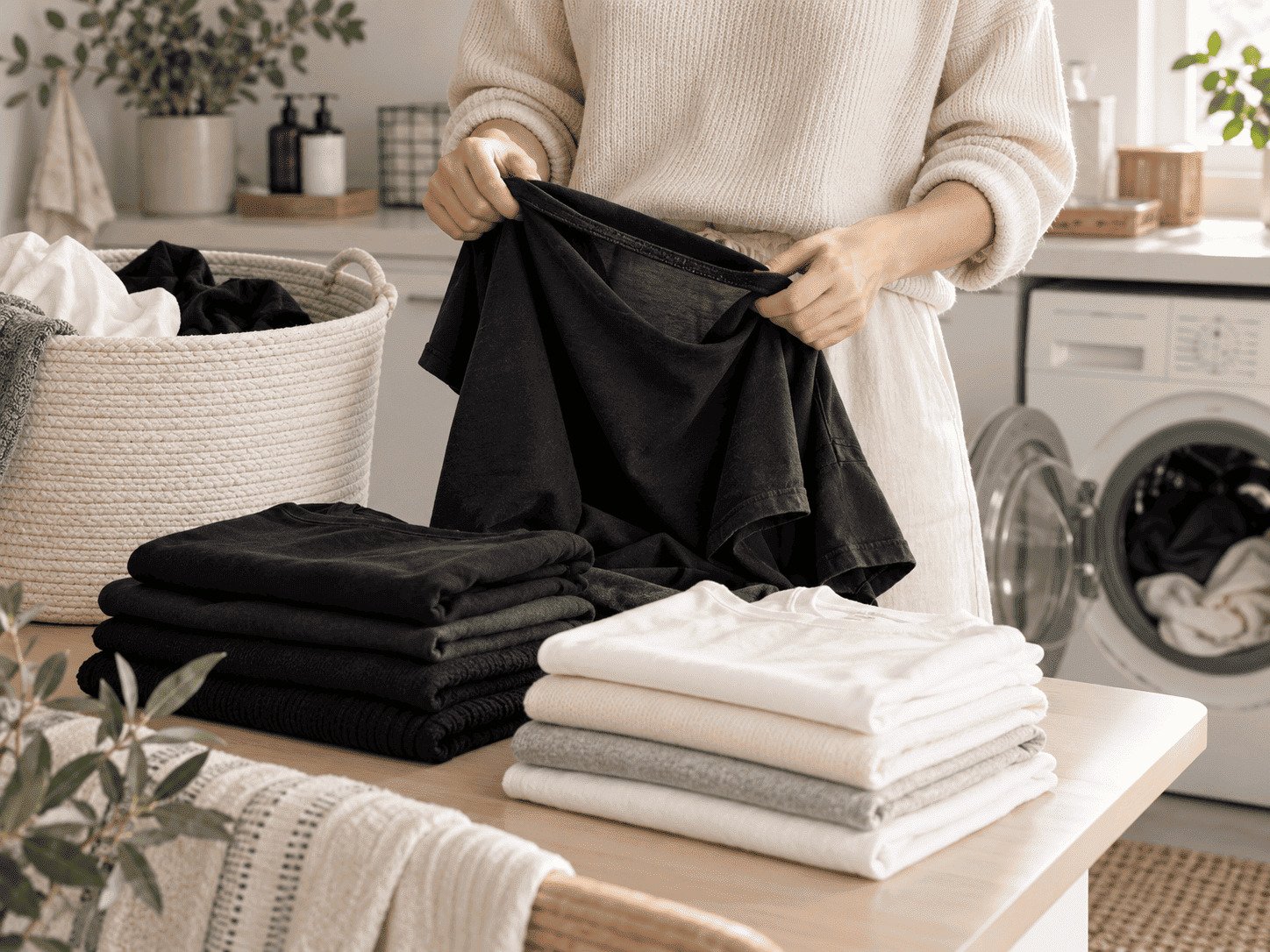
A minimalist wardrobe is built around clothes you can wear often and style in different ways. Your favorite T-shirt, a comfortable pair of jeans, and a simple cardigan might be part of several outfits.
When one of these pieces fades or loses its shape, you may feel the need to replace it. But building a useful wardrobe is not only about choosing the right clothes. Taking care of those clothes matters, too.
Learning how to prevent clothes from fading does not need to be difficult. A few simple habits can help you care for the pieces you already love.
Why Clothing Care Matters in a Minimalist Wardrobe
Think about a work wardrobe with three tops, two pairs of trousers, and one cardigan. Each piece has a clear purpose. When your cardigan needs cleaning or your trousers need a repair, it can affect several outfit choices.
That is why clothing care belongs in your wardrobe plan. The goal is to:
- Keep your everyday clothes ready to wear.
- Take care of small problems before replacing an item.
- You can take advantage of the clothes that you already have
This approach fits the idea of a sustainable capsule wardrobe: focus on using and caring for your clothes, rather than simply buying a smaller collection.
Minimalist fashion is not about keeping every piece looking new forever. It is about keeping useful clothes useful.
Maya wore the same black T-shirt several times a week as part of her capsule wardrobe. She washed it often in warm water and dried it on a regular cycle. After a few months, the color started to fade.
She then began turning it inside out, using cooler water when suitable, and avoiding extra drying time. These small changes helped her take better care of the dark clothes she wore most.
Why Do Clothes Fade?
Clothes can lose color for several reasons, including:
- Repeated washing.
- Rubbing against other clothes during washing.
- Stain treatments that are not right for the item.
- Long periods in strong light.
Some fabrics and dyes also lose color more easily than others. Good care can reduce avoidable fading, but no routine can stop it completely.
1. Check the Care Label First
Two black tops may look similar but need different care. One might be suitable for machine washing, while the other needs hand washing.
Before washing an unfamiliar item:
- Check the recommended water temperature.
- Look for hand-wash or machine-wash instructions.
- Read the drying instructions.
- Notice directions such as “wash separately” or “dry flat.”
The Federal Trade Commission’s clothing care-label rules explain the washing, drying, and warning information required for covered clothing. Use your item’s label as the starting point for its care.
Make Clothing Care Part of Your Shopping Decisions
Before adding something new to your minimalist wardrobe, ask yourself:
- Will I realistically hand wash this?
- Does it need professional cleaning?
- Can I fit its care needs into my normal week?
These questions belong in intentional minimalist shopping. A piece should work with your outfits and your daily routine.
2. Use Cooler Water When the Label Allows It
Cold water can help reduce fading in suitable dark clothes. However, it is not the right choice for every fabric or every stain.
For example, lightly worn work trousers may not need a hot, heavy wash. But an item with an oily stain may need a different approach.
Keep it simple:
- Follow the temperature shown on the label.
- Use cooler water when it suits the item and its cleaning needs.
- Avoid choosing a hot, strong wash for every load.
The aim is to clean your clothes properly without using more heat or rough washing than they need.
3. Turn Suitable Dark Clothes Inside Out
Your black T-shirt, navy trousers, or dark jeans may be pieces you wear with many different outfits.
The American Cleaning Institute’s guide to keeping dark clothes from fading recommends turning suitable machine-washable garments inside out. This helps protect the outside surface from rubbing against other clothes.
Before washing:
- Turn suitable dark pieces inside out.
- Check the label on clothes with prints or decorations.
- Close zippers and fasten hooks where appropriate so they do not catch other fabrics.
This will work for some type of fading, but you should follow these steps while doing laundry.

4. Sort Clothes by Their Washing Needs
A small wardrobe does not mean everything belongs in one wash.
Even clothes that match in color may need different treatment. A dark sweater and dark jeans are not automatically suitable for the same load.
When sorting:
- Separate light and dark clothes.
- Group items with similar fabric and care needs.
- Keep heavily dirty clothes apart from lightly worn pieces.
- Set aside anything that needs hand washing or special care.
- Follow “wash separately” instructions, especially on new items.
You do not need a complicated system. You only need to keep clothes with different washing needs apart.
5. Wash Clothes When They Need It
Owning fewer clothes does not mean wearing dirty clothes to avoid laundry. It also does not mean every outer layer needs washing after a short wear.
As a general guide:
- Wash underwear, socks, T-shirts, and tank tops after each use.
- Consider wearing some trousers or outer layers again when they are not sweaty, dirty, or stained.
- Think about the weather, your activity, the fabric, and the care label.
Trousers worn briefly in a cool office may need different care from a T-shirt worn on a hot day.
Keep Enough Clean Clothes for Your Week
Your minimalist wardrobe should support your life, not make everyday dressing difficult.
When you regularly run out of clean clothes, review your laundry schedule and the number of useful pieces you own. You do not need to follow a fixed clothing count at the cost of having clean outfits.
6. Treat Stains Before Washing Again
A small stain does not always mean your favorite top needs replacing.
Instead of washing the same item repeatedly without a plan:
- Check its care label.
- You should look for a treatment that is equally beneficial for fabric and stain.
- Follow the treatment product’s directions.
- Test a small, hidden area first when appropriate.
- Check whether the stain is gone before putting the item in the dryer.
Different stains need different care. The American Cleaning Institute’s stain removal guide gives instructions for specific marks and advises against machine drying until the stain is removed.
In a capsule wardrobe, treating a stain may help you keep a blouse or shirt that works with several outfits.
7. Follow the Drying Instructions
Washing is only one part of caring for your clothes. Drying them correctly matters, too.
Before you dry a piece:
- Check whether it can go in the dryer.
- Use the recommended heat setting.
- Avoid leaving it drying longer than necessary.
- Air-dry it when practical and allowed by the label.
- Lay it flat when the instructions say to do so.
Too much drying can contribute to shrinkage. Also, air-drying does not always mean hanging clothes on a line. Some sweaters need to dry flat.
For pieces you rely on often, plan ahead. Wash your regular cardigan while you still have another clean layer available, rather than rushing its drying time.
8. Avoid Leaving Clothes in Strong Sunlight
Clothes can fade outside the washing machine, too. The Canadian Conservation Institute’s guidance on light damage to textiles explains that visible and ultraviolet light can change fabric colors. Its guidance focuses on museum collections, but the explanation helps us understand why dyed clothes can fade in sunlight.
For your everyday wardrobe:
- Follow any instructions to dry clothes in the shade.
- Bring outdoor laundry inside once it is dry.
- Avoid leaving your favorite pieces beside a sunny window for days.
- Check whether an open clothes rack gets direct sunlight for long periods.
You do not need to avoid wearing your clothes outside. The point is to avoid leaving them in strong light when they are not being used.
9. Store Clothes Without Stretching Them
Color is not the only thing that keeps an item useful. Its shape and condition matter as well.
When putting clothes away:
- Make sure they are fully dry.
- Fold sweaters and stretchy knits, as hanging could stretch them.
- Use suitable hangers for clothes that should hang.
- Clean seasonal clothes before storing them.
- Check stored pieces for stains, loose seams, and other damage before wearing them again.
When planning your seasonal minimalist outfits, include a little time to check the clothes coming out of storage. The goal is to bring them back into use ready to wear.

10. Choose New Clothes You Can Care For
Before buying another basic top, pair of trousers, or sweater, think beyond how it looks.
Ask yourself:
- Does it work with clothes I already own?
- Will I wear it often?
- Does it fit comfortably?
- Can I manage its washing and drying needs?
- Have I checked the stitching and overall condition?
These checks cannot promise that an item will last a certain number of years. But they can help you choose clothes that suit your wardrobe and the amount of care you can give them.
When building a minimalist wardrobe on a budget, consider how you will use and maintain each piece, not just its price tag.
11. Fix Small Problems Before Replacing Clothes
A missing button or loose hem can stop you from wearing an otherwise useful piece.
Before removing something from your wardrobe, ask:
“Would I wear this again if the problem were fixed?”
For small repairs:
- Keep a needle, thread, spare buttons, and small scissors together.
- Set aside clothes that need attention.
- Repair loose seams before washing when practical.
- Get help with repairs that are beyond your skills.
As you explore the benefits of decluttering your minimalist wardrobe, remember that a repairable item is different from one you no longer need. You do not need to keep every damaged piece, but consider whether a small repair would make it useful again.

12. Build a Simple Wardrobe Care Routine
A small wardrobe does not need a long maintenance checklist. Just follow these:
Before Laundry
- Check unfamiliar care labels.
- Sort clothes by their washing needs.
- Empty pockets.
- Turn suitable dark pieces inside out.
- Look for stains and small repairs.
After Laundry
- Follow each item’s drying instructions.
- Put clothes away only when fully dry.
- Set aside anything that still needs cleaning or repair.
Once a Month
- Check the clothes you wear most often.
- Look for missing buttons, loose stitching, and marks.
- Notice pieces you keep avoiding.
- Review whether you have enough useful clothes for your week.
This review can help you see whether your wardrobe needs better care, a small repair, or a change in laundry planning before you decide to buy more.
Frequently Asked Questions
How Can I Keep Black Clothes From Fading?
Follow the care label, wash them with suitable items, and turn them inside out when appropriate. Cold water may help with suitable dark clothes, but the wash still needs to clean them properly.
Does Cold Water Stop Fading Completely?
No. Cold water can help reduce fading in some clothes, but the dye, fabric, wear, and other care habits also matter. No washing method guarantees that clothes will never fade.
Should I Wash Capsule Wardrobe Clothes After Every Wear?
It depends on different factors. First of all, how long you wore them and what kind of clothes they are. Underwear, socks, and T-shirts generally need washing after each use. Some outer clothes may be suitable for another wear, depending on their condition and care needs.
Should I Replace Clothes as Soon as They Look Faded?
Not automatically. A change in color does not always mean a piece is no longer useful. Think about whether it still fits, feels comfortable, and works for your daily life. Replace it when it no longer meets your needs, not simply because it no longer looks new.
Final Thoughts: Care for the Clothes You Already Love
Knowing how to prevent clothes from fading is part of making a minimalist wardrobe work for everyday life.
Start with the clothes you reach for most. Read their labels, plan time for washing and drying, and fix small problems when it makes sense.
Some fading and wear are normal. The goal is not a perfect closet filled with untouched clothes. It is a smaller, useful wardrobe that stays clean, comfortable, and ready to wear.
Minimalist fashion is not only about owning less. It is about making good use of what you already own.
What’s your go-to tip for keeping your capsule wardrobe’s colors fresh and vibrant?