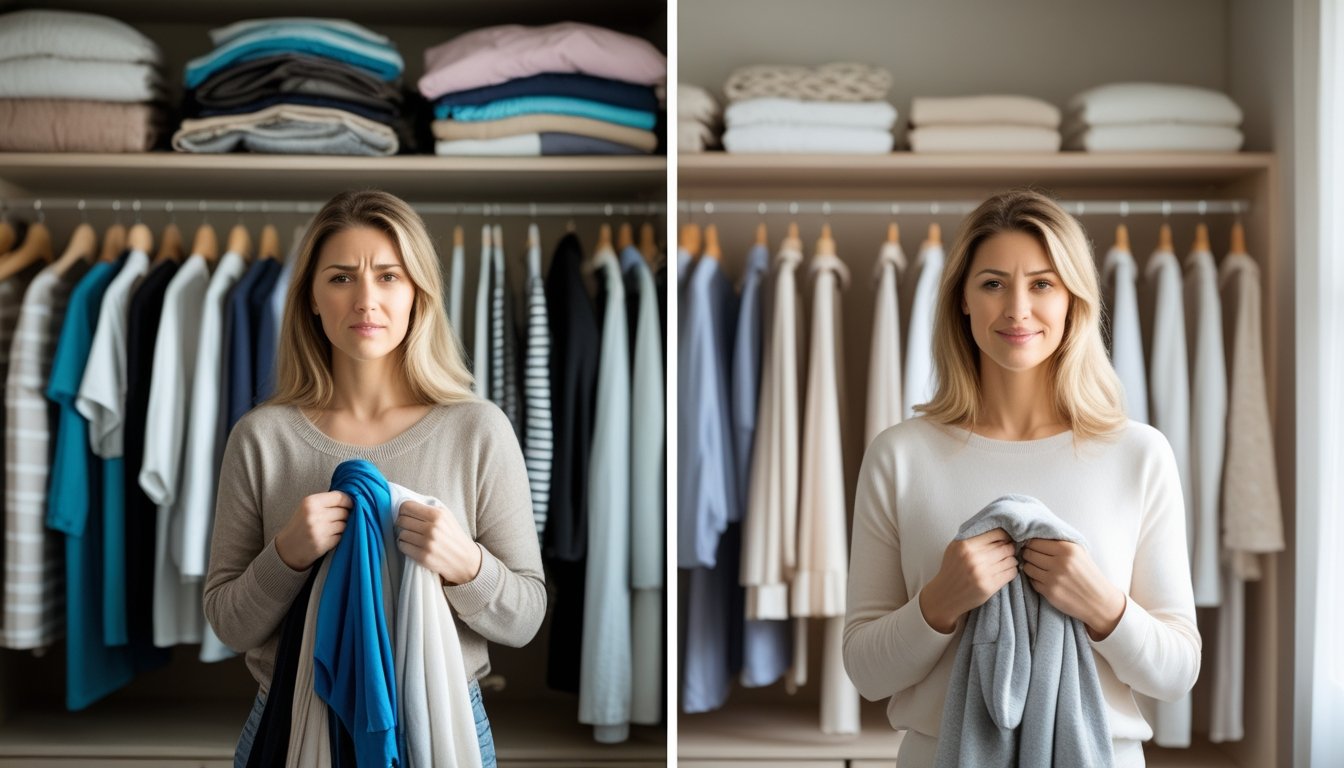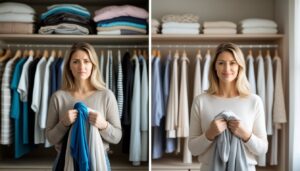
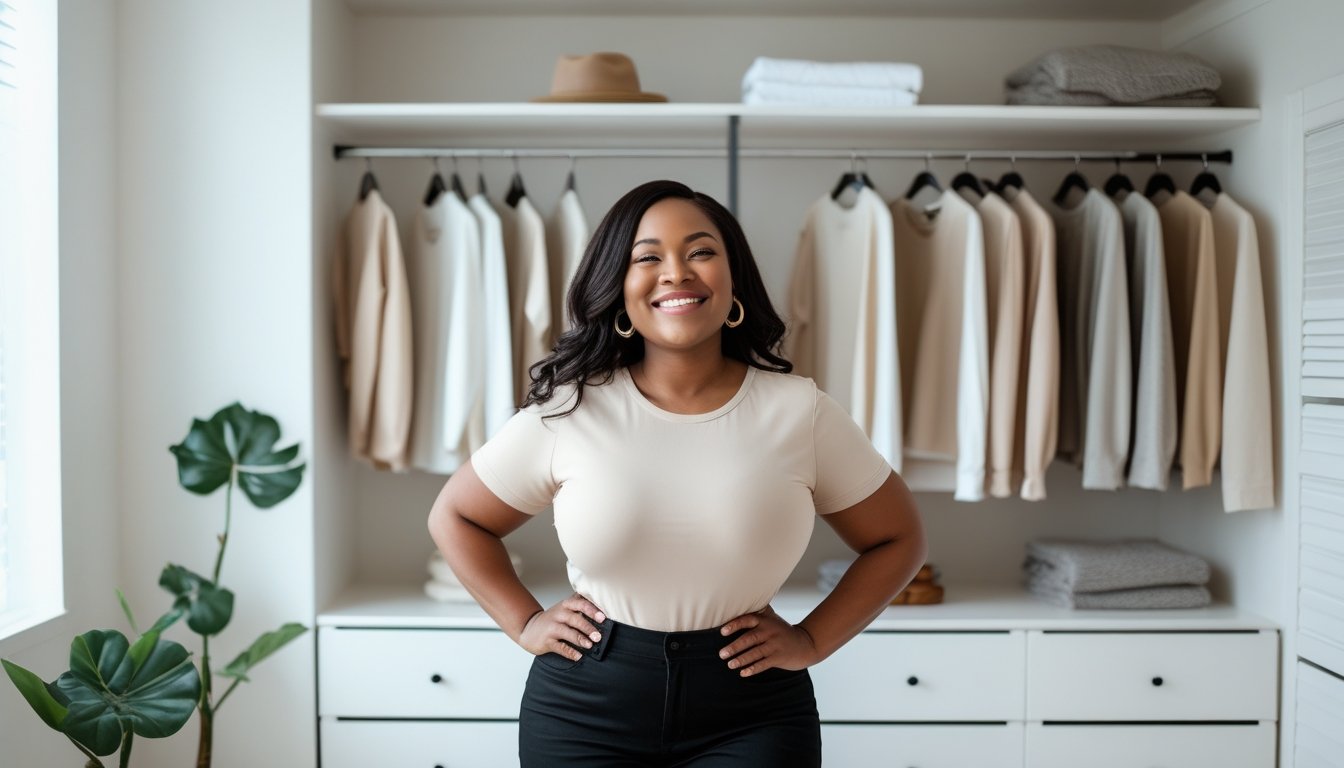
Building a minimalist wardrobe sounds simple until you open your closet and feel overwhelmed. Too many clothes, nothing feels right, and getting dressed takes longer than it should. For plus-size women, this struggle often feels even more frustrating because fit, comfort, and confidence all matter at the same time.
A minimalist wardrobe is not about owning fewer clothes just for the sake of it. It is about owning the right clothes, pieces that fit your body today, suit your lifestyle, and make you feel confident without effort. When done properly, a minimalist wardrobe removes daily stress and helps you focus on what actually matters.
This guide is written for real women living real lives. It does not follow unrealistic fashion rules or promote quick fixes. Instead, it offers practical, research-backed advice that helps plus-size women build a wardrobe that feels comfortable, intentional, and easy to maintain.
If you are tired of impulse shopping, overcrowded closets, and outfits that never feel quite right, this article will help you build a minimalist wardrobe that truly works for you.
For Reading More on Intentional shopping, click Minimalist Shopping
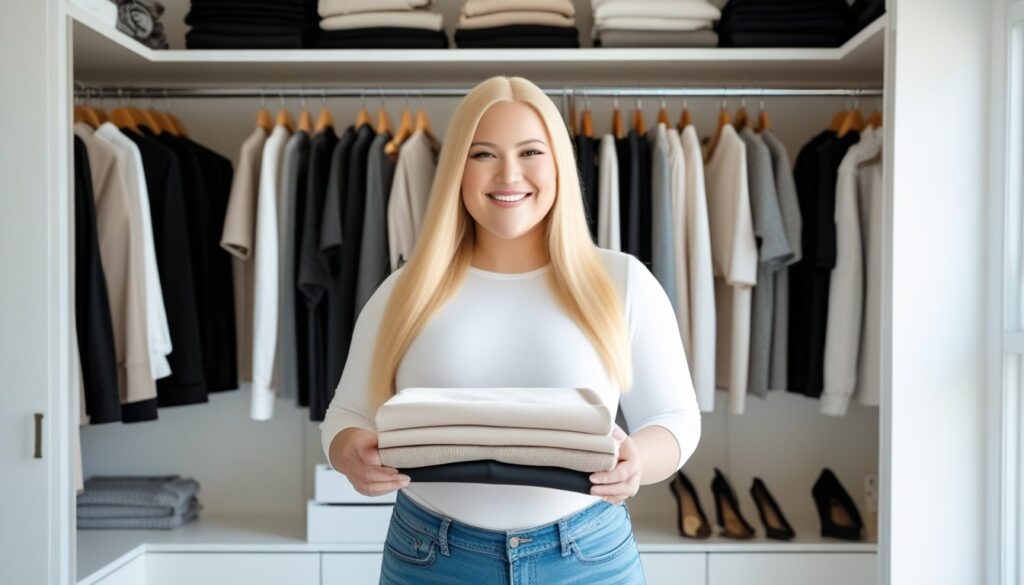
1. What Is a Minimalist Wardrobe and Why Does It Work So Well for Plus-Size Women?
A minimalist wardrobe means keeping fewer clothes that you truly love and wear often.
It focuses on quality, fit, and versatility instead of trends or quantity.
For plus-size women, this approach works especially well because:
- Fit matters more than fast fashion
- Comfort affects confidence
- Replacing clothes is often more expensive
Instead of buying ten “almost okay” tops, you invest in three that fit beautifully and feel right all day.
According to Vogue, minimalist fashion is not about size or body type. It is about intentional choices and personal style.
Source: https://www.vogue.com/article/minimalist-fashion-tips
A friend of mine used to own over 150 clothing items. She still repeated the same five outfits. Once she reduced her closet to around 40 pieces, she stopped feeling overwhelmed. Her confidence improved because every item fit her body, not an imaginary version of it.
Minimalism does not mean strict rules. It means less stress, less clutter, and more confidence. If you want to know more about how to create a minimalist wardrobe, please visit Minimalist Wardrobe.
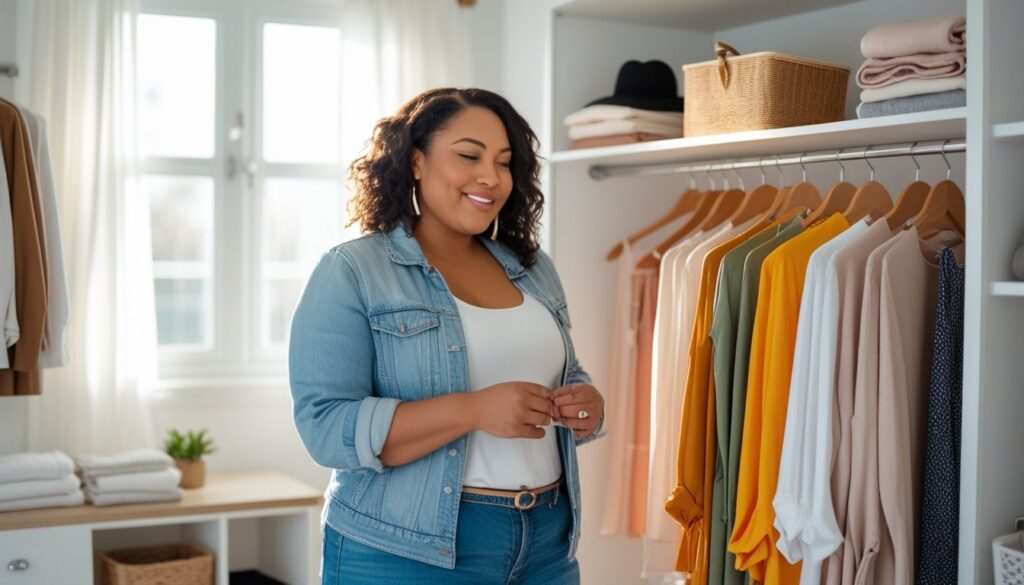
2. How Can Plus-Size Women Discover Their Personal Style Before Building a Minimalist Wardrobe?
Before removing anything from your closet, you need to understand your personal style.
Skipping this step leads to regret and impulse shopping later.
Ask yourself simple questions:
- Where do I actually go during the week?
- Do I dress more casually or professionally?
- What clothes make me feel confident, not just “acceptable”?
- In what clothes do I look better?
Your lifestyle matters more than trends.
If you work from home, you do not need five formal blazers. If you attend meetings, stretchy leggings alone will not help.
A helpful method comes from the concept of “style identity,” often discussed by fashion psychologists. Choose what looks best on you
Try this small exercise:
- Pick three outfits you wear most often
- Write down why you like them
- Look for patterns in colors, fits, and fabrics
This gives you clarity. Once you know your style, minimalism becomes easier and more personal.
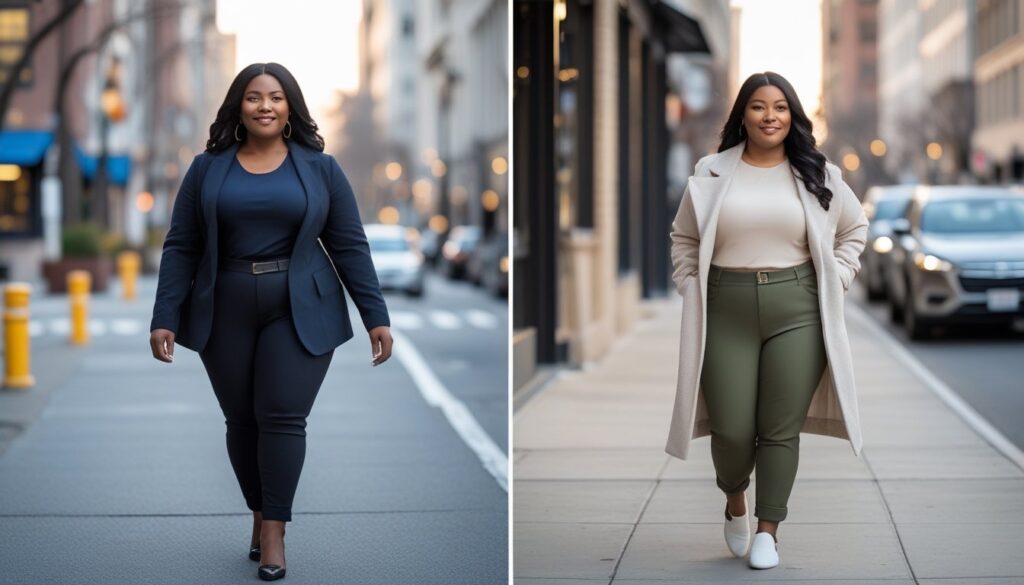
3. How Can Plus-Size Women Discover Their Personal Style Before Building a Minimalist Wardrobe?
Before removing anything from your closet, you need to understand your personal style.
Skipping this step leads to regret and impulse shopping later.
Ask yourself simple questions:
- Where do I actually go during the week?
- Do I dress more casually or professionally?
- What clothes make me feel confident, not just “acceptable”?
- In what clothes do I look better?
Your lifestyle matters more than trends.
If you work from home, you do not need five formal blazers. If you attend meetings, stretchy leggings alone will not help.
A helpful method comes from the concept of “style identity,” often discussed by fashion psychologists. Choose what looks best on you
Try this small exercise:
- Pick three outfits you wear most often
- Write down why you like them
- Look for patterns in colors, fits, and fabrics
This gives you clarity. Once you know your style, minimalism becomes easier and more personal.
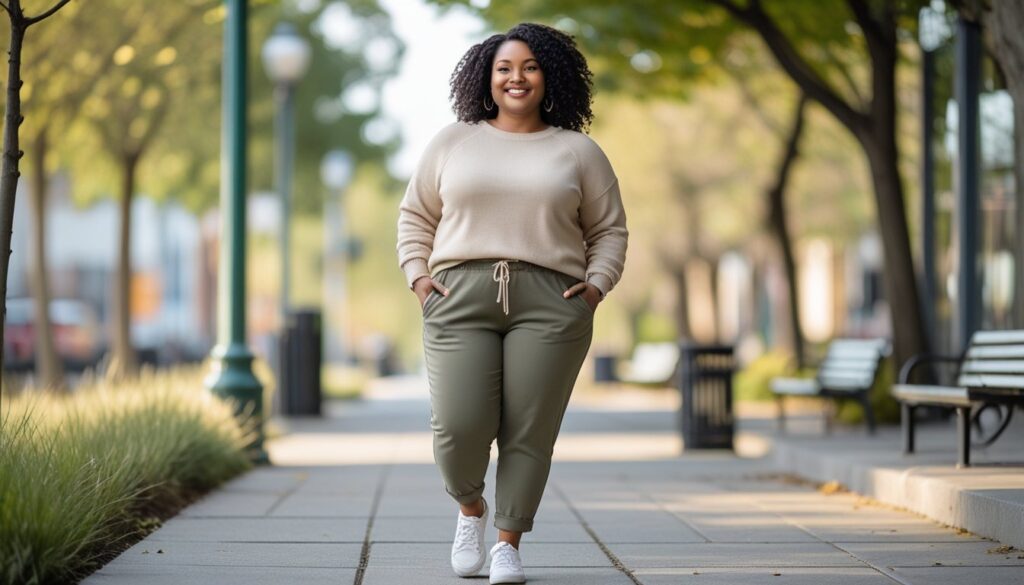
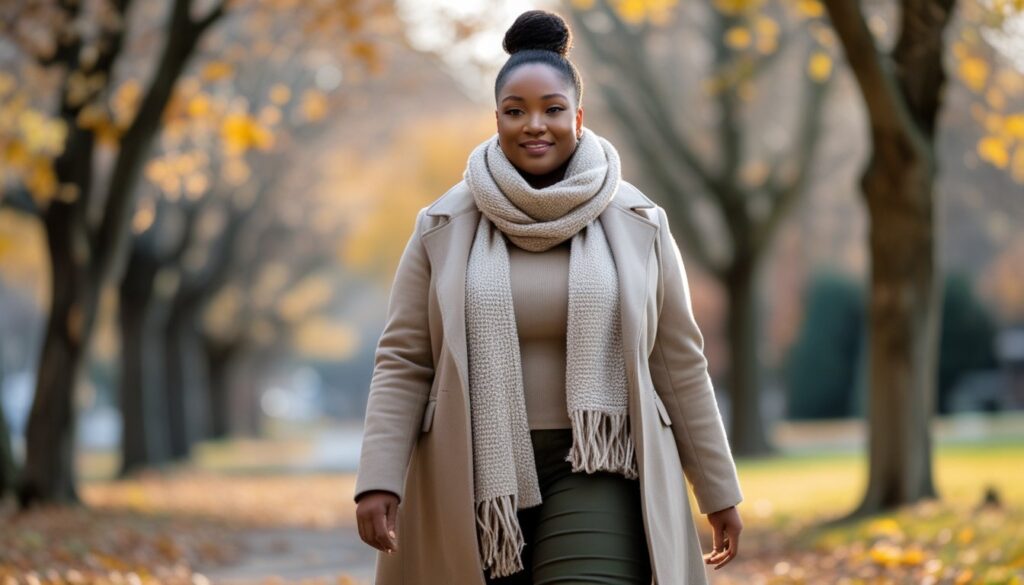

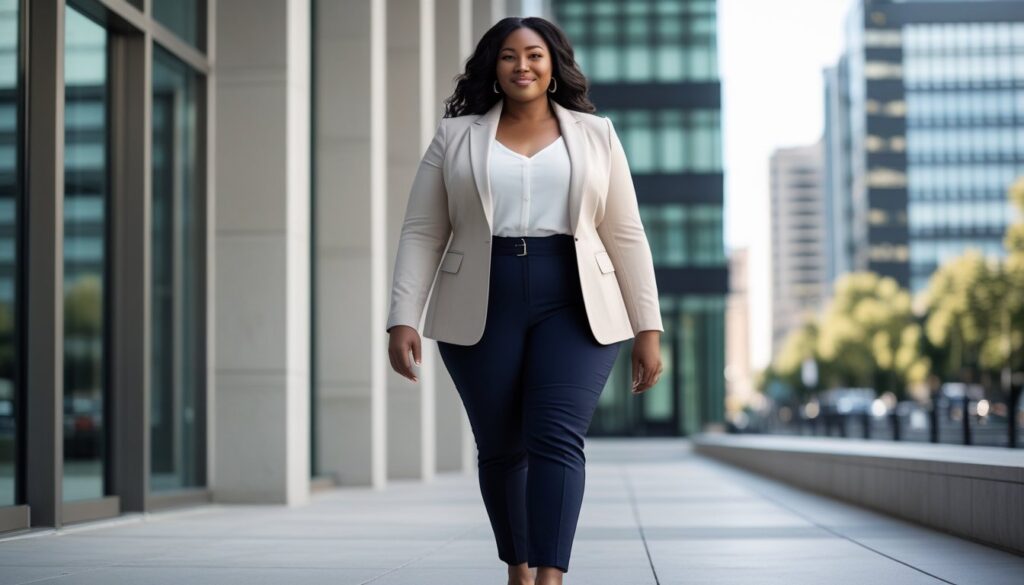
4. How Many Clothes Should a Minimalist Wardrobe for Plus-Size Women Have?
There is no perfect number. Anyone telling you otherwise is selling an idea, not reality. Most minimalist wardrobes fall between 30 to 50 pieces, excluding underwear and sleepwear.
This range comes from capsule wardrobe research discussed by Project 333.
Source:https://bemorewithless.com/project-333/
Instead of counting items, focus on coverage. You can categorize your clothes in a way:
- Work outfits
- Casual wear
- Special occasions
- Seasonal needs
If your wardrobe covers your life, the number does not matter.
One logical rule that works well is the “one in, one out” habit. When you buy something new, remove one item you no longer wear. This keeps your wardrobe intentional without stress.
If you want to learn about summer wardrobe essentials, check out the Summer Minimalist Wardrobe.
5. Essential Clothing Pieces for a Minimalist Wardrobe for Plus-Size Women
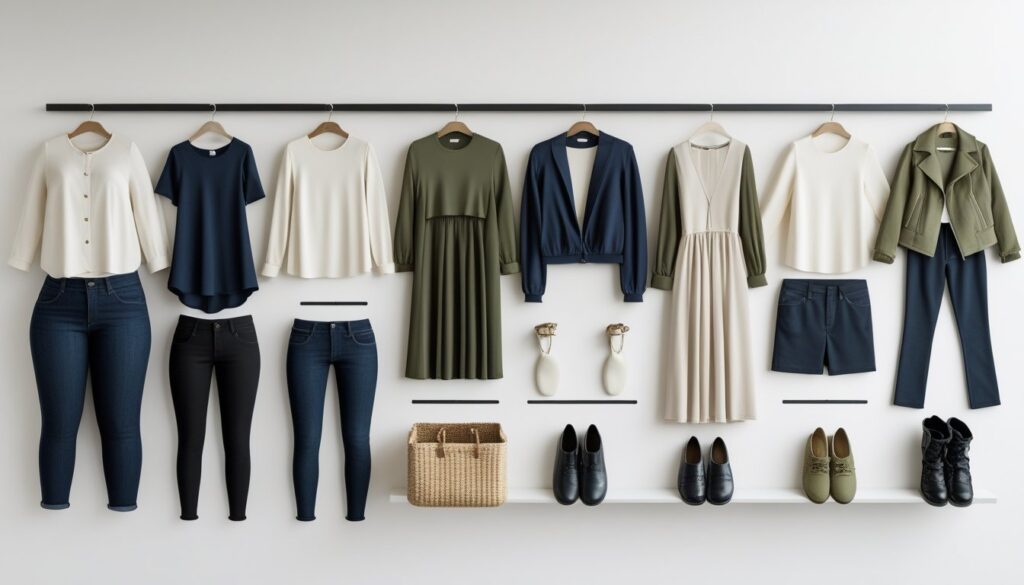
A minimalist wardrobe relies on strong basics that work together. Here are essentials that usually work well:
Tops:
- Comfortable everyday tops
- One or two structured blouses
- A layering cardigan or jacket
Bottoms:
- Well-fitted jeans
- Stretch trousers or ponte pants
- One casual and one dressy option
Dresses:
- One casual dress
- One dress for events or dinners
Outerwear:
- A neutral jacket
- A seasonal coat
Shoes:
- Comfortable everyday shoes
- One dressy pair
- One seasonal pair
According to The Good Trade, choosing versatile basics reduces overbuying and clutter. Always prioritize comfort and fit. Minimalism fails when clothes sit unworn because they feel uncomfortable.
6. Why Fit Matters More Than Size in a Plus-Size Minimalist Wardrobe
The number on the tag does not define comfort or confidence. Fit does. Ill-fitting clothes cause pulling, adjusting, and constant discomfort. Well-fitted clothes allow movement and confidence. So always prioritize well-fitted clothes.
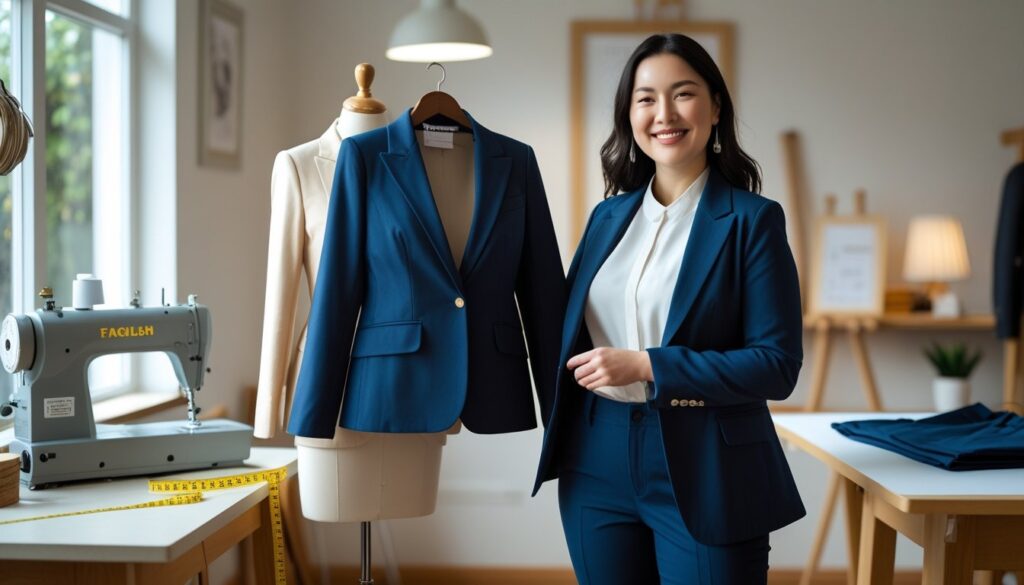
Tailoring helps more than people realize.
According to Alterations Needed, minor tailoring improves wearability and longevity.
Source: https://alterationsneeded.com
I once altered a basic blazer instead of replacing it. The cost was lower than buying new, and I wore it for years. A minimalist wardrobe thrives on clothes that feel made for you.
7. How to Declutter Your Closet Without Feeling Overwhelmed
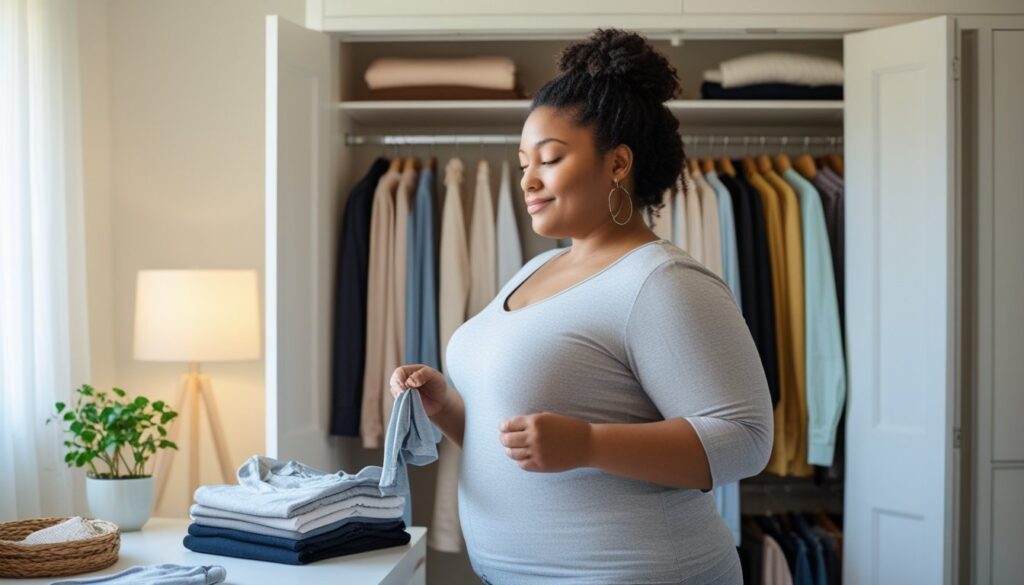
Decluttering feels emotional. Clothes carry memories. So take a deep breath and think about which clothes you need most. If you have some memories associated with those clothes, you can even cry. Then decide to declutter them.
Start small:
- Declutter one category at a time and make a pile
- Try everything on
- Ask honest questions
Helpful questions include:
- Do I wear this now?
- Does it fit my body today?
- Would I buy it again?
Decluttering is not about punishment. It is about making space for clothes that serve and fit you well.
8. How to Create Multiple Outfits From Fewer Clothes
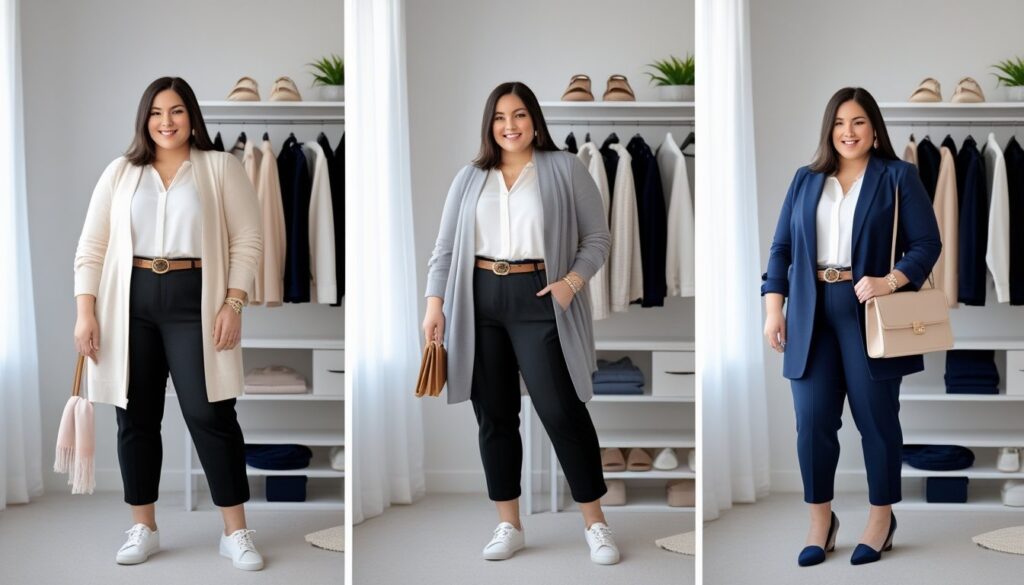
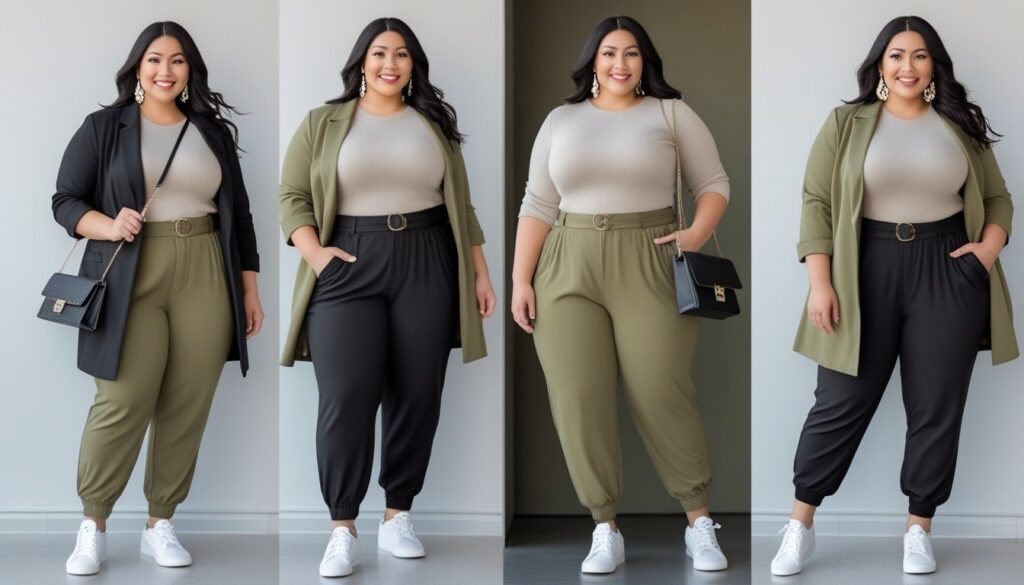
- Stick to a consistent color palette:
Choosing a small, consistent color palette makes getting dressed much easier. When most of your clothes share similar colors, everything mixes and matches naturally. You spend less time deciding what goes together and more time feeling confident in what you wear. Neutrals like black, beige, white, gray, or navy work as a base, while one or two accent colors keep things interesting. This approach also helps you buy smarter in the future, because every new piece fits seamlessly into your wardrobe. - Layer pieces differently:
Layering is one of the easiest ways to make the same clothes feel new again. A basic dress can look completely different with a cardigan, blazer, or lightweight jacket. A shirt can be worn tucked in, open over a tank top, or tied at the waist. Small changes in layering create fresh outfits without buying anything new, which saves money and reduces wardrobe boredom. - Change shoes or accessories:
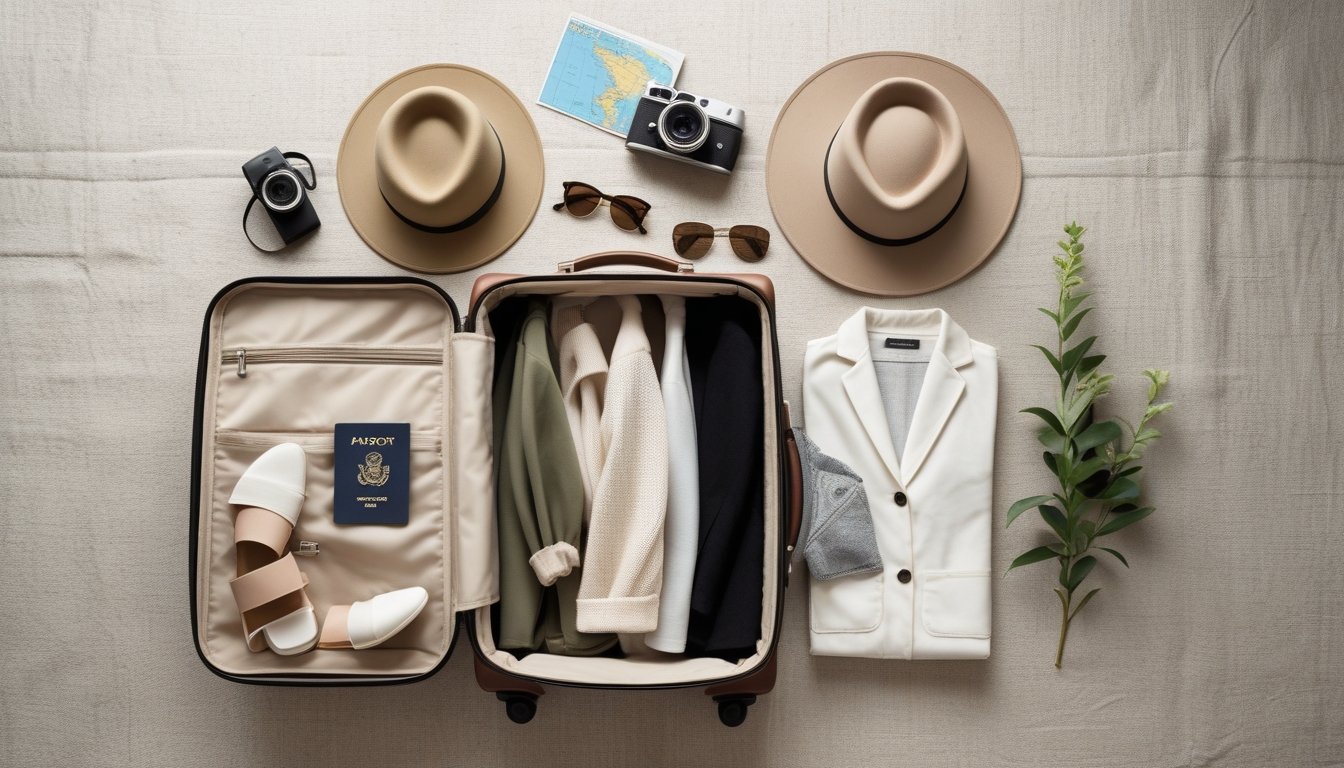
Shoes and accessories can transform an outfit instantly. The same jeans and top can look casual with sneakers, polished with loafers, or dressed up with heels. Adding a belt, scarf, or statement bag can shift the entire vibe. These small swaps help you get more use out of your clothes and express your personal style with minimal effort.
9. How Can Plus-Size Women Shop Mindfully and Avoid Overbuying?
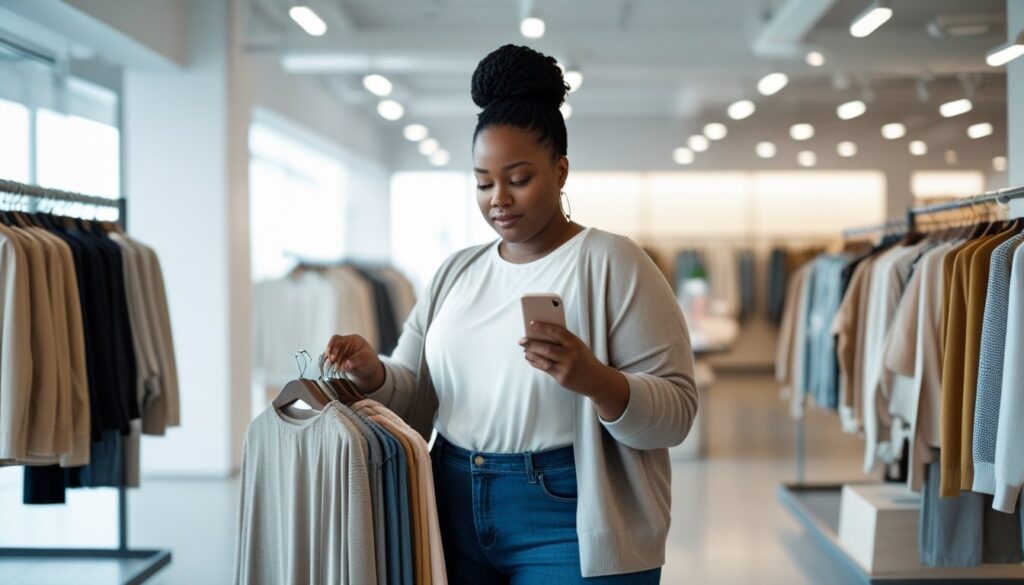
Impulse shopping breaks minimalism. Before buying, ask:
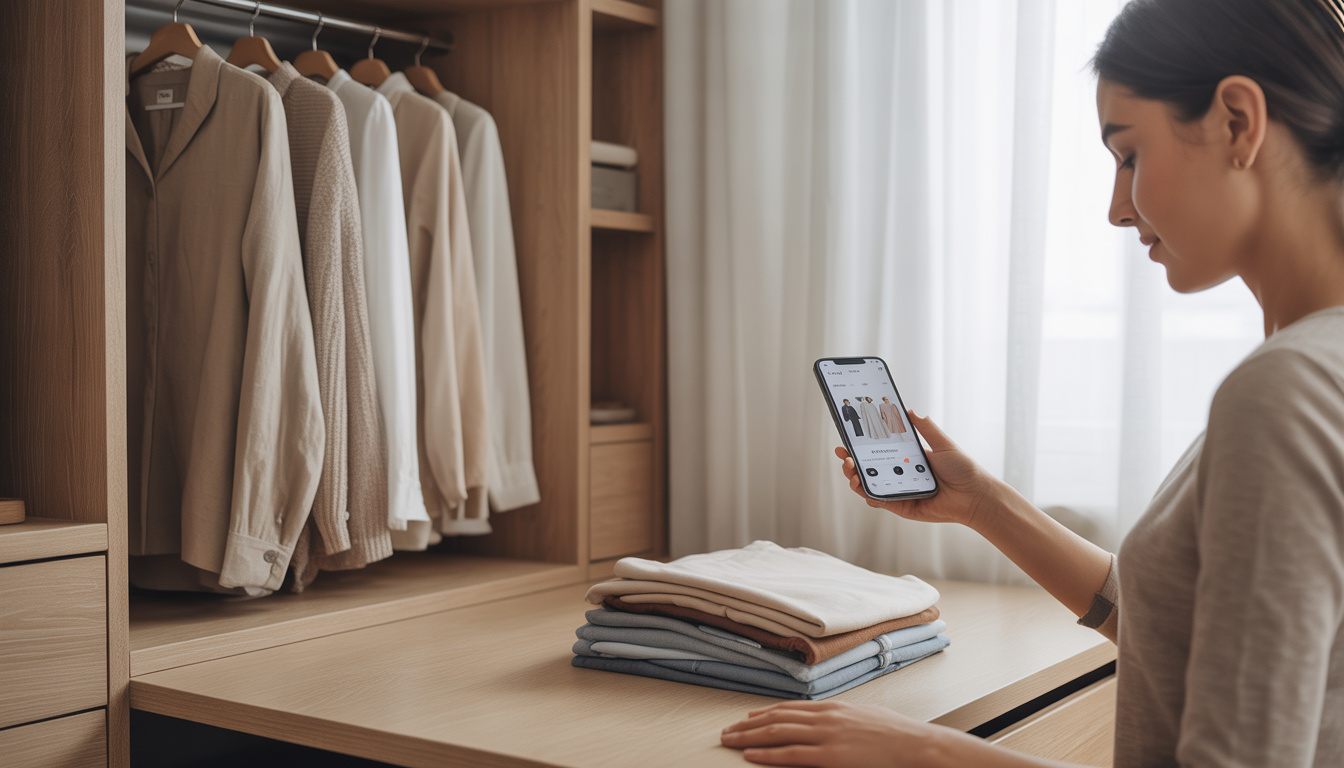
- Does this match at least three items I own?
- Will I wear it within two weeks?
- Is it replacing something?
The concept of mindful consumption is supported by sustainability research.
Shopping with intention saves money and space.
10. How a Minimalist Wardrobe Builds Confidence for Plus-Size Women
a. Wearing Clothes That Truly Fit
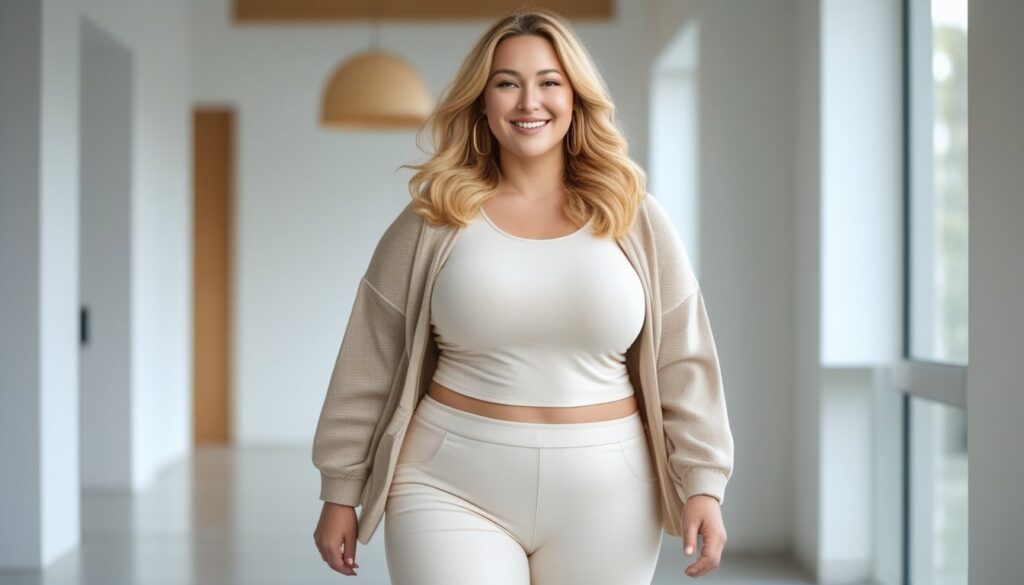
A minimalist wardrobe encourages you to keep only the clothes that fit your body right now. This alone can make a huge difference in confidence.
- No more squeezing into uncomfortable sizes
- No “someday” clothes that create guilt
- Every piece feels supportive and flattering
When your clothes fit well, you feel more comfortable and at ease throughout the day.
b. Understanding What Works for Your Body
With fewer items in your closet, it becomes easier to see patterns in what suits you best.
- You identify flattering silhouettes
- You learn which fabrics feel good on your skin
- You gain clarity on colors that enhance your features
This awareness removes doubt and helps you get dressed with confidence.
c. Less Comparison, More Self-Acceptance
Minimalism naturally shifts your focus away from trends and unrealistic beauty standards.
- You stop dressing for comparison
- You dress for your lifestyle and comfort
- Your wardrobe reflects you, not fashion pressure
This mindset creates emotional freedom and self-trust.
d. From Hiding to Honoring Your Body
A minimalist wardrobe helps change how you view your body.
- Clothes support your movement, not restrict it
- Comfort becomes a priority
- Dressing becomes an act of self-respect
Over time, this intentional approach builds confidence from within, because you are choosing to honor your body exactly as it is.
11. Common Mistakes Plus-Size Women Should Avoid
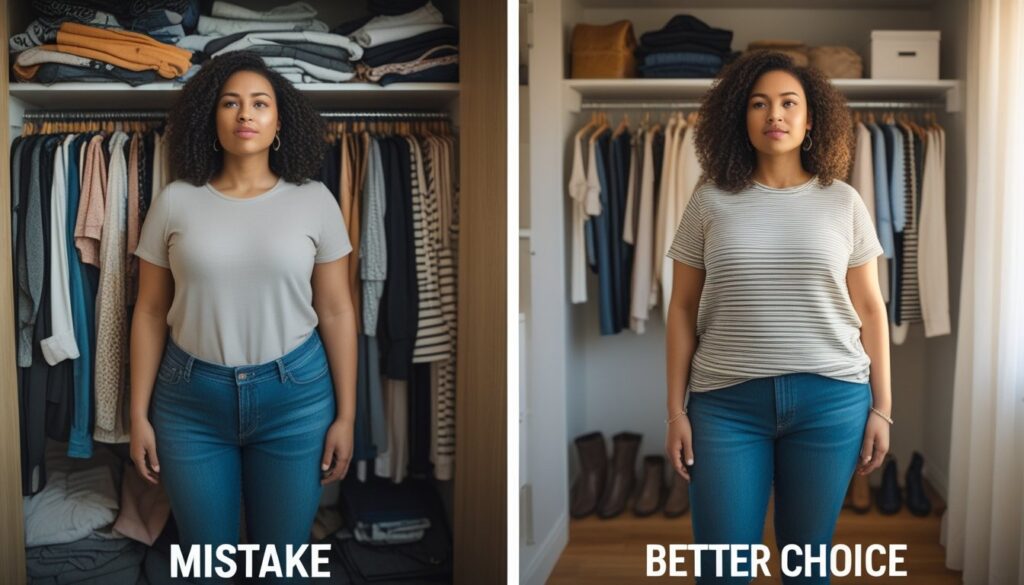
1. Wearing clothes that are too loose to “hide” the body
A very common mistake is choosing oversized clothes, thinking they will hide curves. In real life, this often does the opposite. For example, wearing a very loose tunic with baggy pants can make the body look heavier and shapeless. Clothes that gently follow your shape, like a well-fitted top with straight-leg jeans, usually look more balanced and flattering.
2. Ignoring proper fit and tailoring
Many plus-size women buy clothes that almost fit but not quite. Sleeves may be too long, waistlines sit awkwardly, or pants bunch up. A real-life example is a blazer that looks expensive but hangs oddly at the shoulders. A simple alteration can completely change how polished and confident you feel.
3. Sticking only to dark colors
Black is great, but wearing only dark colors can feel limiting. For example, avoiding light tops or printed dresses out of fear can make your wardrobe boring. Soft neutrals, jewel tones, or subtle prints can brighten your look and mood without drawing unwanted attention.
4. Ignoring comfort for trends
Squeezing into trendy jeans that pinch your waist or wearing uncomfortable shoes for style can ruin your day. If you are constantly adjusting your clothes, it shows. Real confidence comes from feeling comfortable first.
5. Dressing for size, not lifestyle
Buying clothes for a “future size” or holding onto items that no longer fit can create frustration. Dressing for your current body and daily routine helps you feel put together every day, not someday.
The biggest takeaway? Style is about fit, comfort, and confidence, not hiding your body.
12. How to Maintain a Minimalist Wardrobe Long-Term
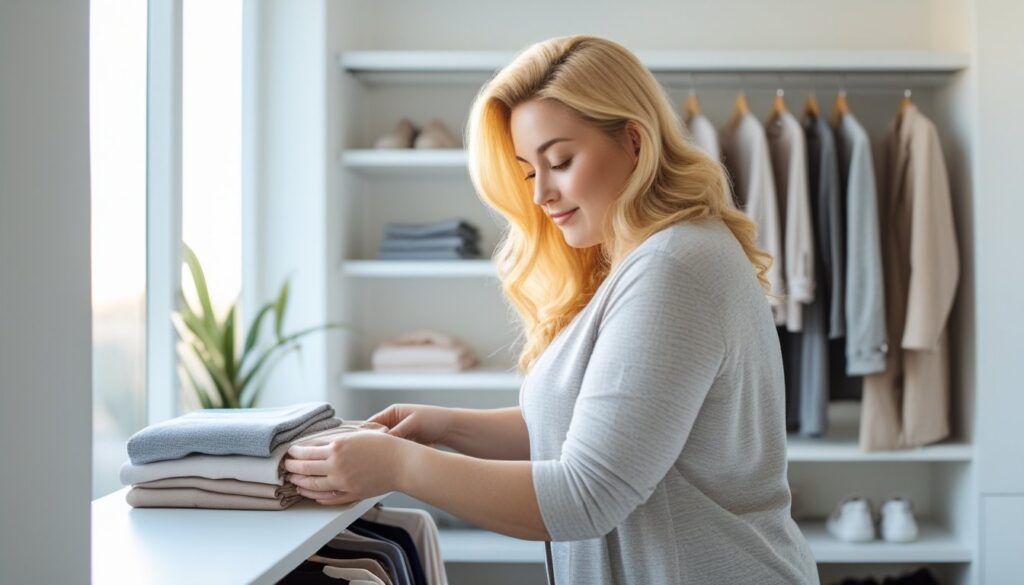
Maintenance matters more than decluttering. Habits that help:
- Seasonal wardrobe check
- Quality over quantity
- Thoughtful shopping
Minimalism is a lifestyle, not a one-time task.
13. Final Thoughts: Building a Minimalist Wardrobe That Truly Works for You
Building a minimalist wardrobe as a plus-size woman is not about following strict fashion rules or trying to fit into someone else’s idea of style. It is about making thoughtful choices that support your real life, your comfort, and your confidence.
A well-planned minimalist wardrobe saves more than closet space. It saves time in the morning, reduces decision fatigue, and helps you feel prepared instead of frustrated. When every piece fits well and feels good, getting dressed becomes easier and more enjoyable.
Remember this. Your body does not need fixing. Your wardrobe does. Clothes should work for you, not the other way around. Let go of items that no longer fit your lifestyle or make you feel uncomfortable. Keep the pieces that respect your body today and help you move through your day with ease.
If you feel unsure at any stage, that is normal. Start with one drawer, one category, or one outfit. Progress builds confidence, and confidence changes how you show up in the world.
FAQs
1. How do I start a minimalist wardrobe as a plus-size woman?
Start by understanding your lifestyle and personal style. Focus on clothes that fit your body today and remove items you no longer wear or feel comfortable in.
2. How many clothes should a plus-size minimalist wardrobe have?
There is no fixed number. Most minimalist wardrobes range between 30 and 50 pieces, depending on work, climate, and daily activities.
3. Can a minimalist wardrobe still look stylish for plus-size women?
Yes. Style comes from fit, fabric, and confidence. A smaller wardrobe with well-fitted pieces often looks more polished than a crowded closet.
4. What clothes should plus-size women avoid in minimalism?
Avoid clothes that do not fit properly, feel uncomfortable, or require constant adjusting. Minimalism works best when comfort and confidence come first.
5. Is a minimalist wardrobe expensive to build?
Not necessarily. Buying fewer, better-quality items over time often saves money compared to frequent impulse shopping.