1. Why Decluttering Clothes Matters More Than You Think?
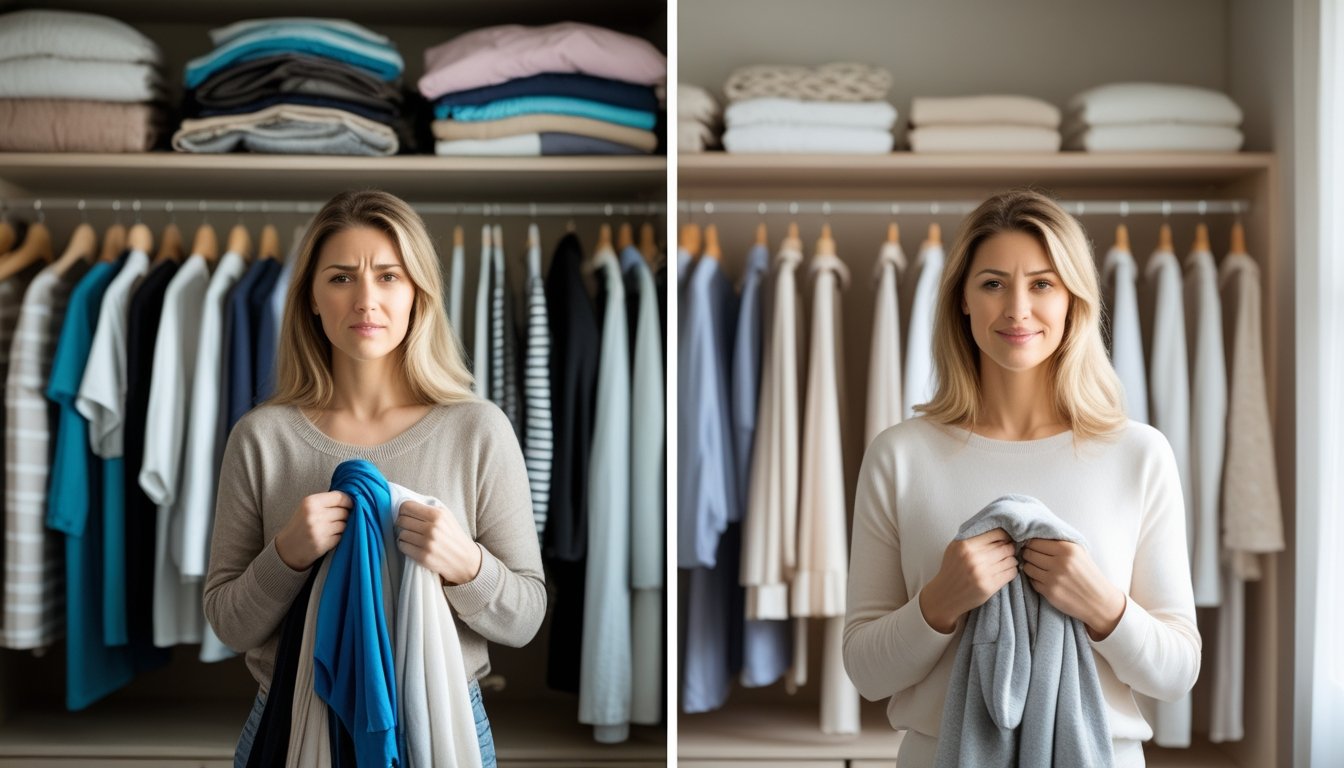
Most women do not struggle with fashion. They struggle with clutter.
You open your wardrobe, see rows of clothes, and still feel confused about what to wear. That frustration is not random. It is a sign that your wardrobe is overloaded, not supportive. This is where the real benefits of decluttering clothes begin.
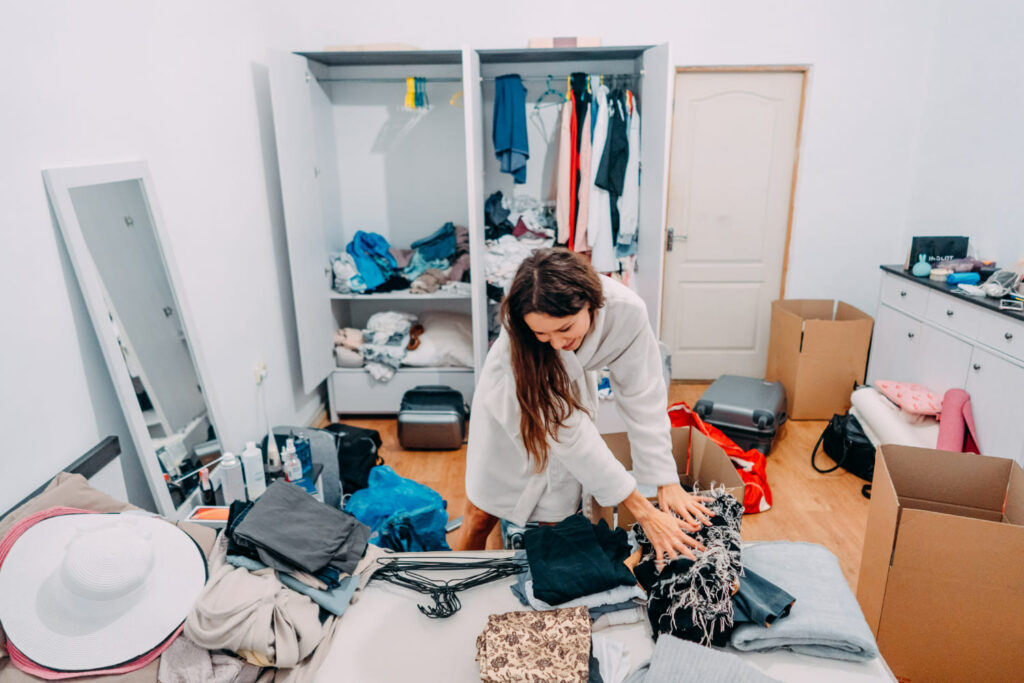
I experienced this myself one day. I opened my wardrobe and found it overflowing with clothes. I decided to iron a few pieces to wear, but when I tried them on, they no longer fit because I had gained some weight. I ended up wasting a lot of time trying to find something else to wear. It became even more stressful, and I was running late for my doctor’s appointment.
Decluttering clothes is not about being strict or trendy. It is about making your daily life easier. Every morning, your wardrobe asks you to make decisions. When there are too many options, your brain gets tired before the day even starts. Research from Princeton University shows that visual clutter competes for attention and increases mental overload. Your closet plays a bigger role in your mood than you may realize.
In minimalist fashion, decluttering is the foundation. You cannot build a mindful wardrobe on top of chaos. When clothes no longer match your lifestyle, body, or values, they silently create stress. You may feel rushed, irritated, or even disappointed in yourself, without knowing why.
Many women keep clothes for emotional reasons. “I spent money on this.” “I might need it someday.” “I used to look good in this.” These thoughts are normal, but they keep you stuck in the past.
Decluttering clothes is not about loss. It is about clarity. When your wardrobe reflects who you are today, getting dressed feels lighter, faster, and more confident. That small daily win sets the tone for your entire day.
2. What Does Decluttering Clothes Really Mean?
Decluttering clothes does not mean throwing away everything you own and starting over. That is a common myth, and honestly, it scares people away before they even begin. Real decluttering is quieter and more thoughtful.
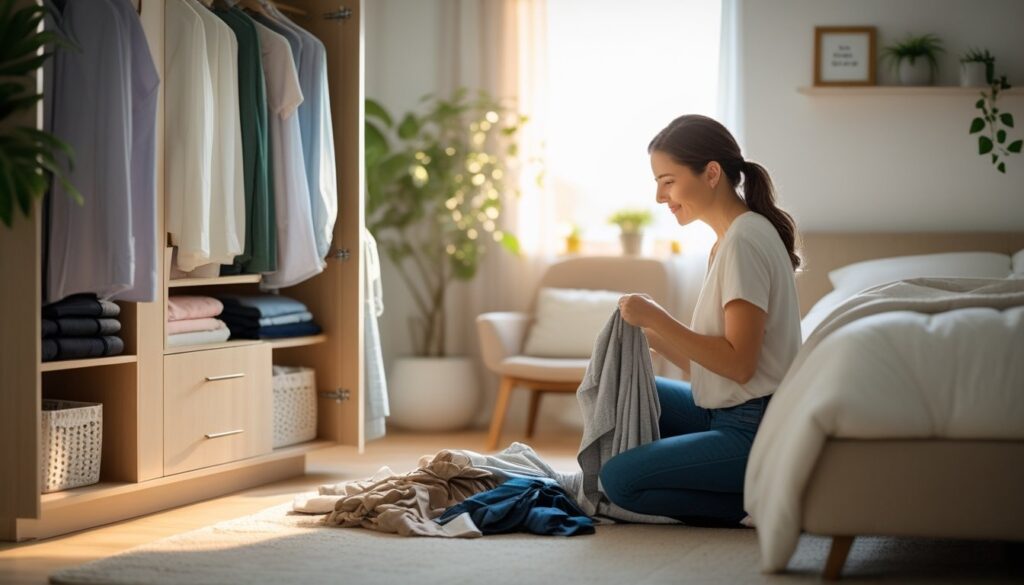
At its core, decluttering clothes means intentionally deciding what deserves space in your wardrobe and what does not. It is about separating clothes you actually wear from clothes you keep out of habit, guilt, or hope. Cleaning folds your clothes neatly.
According to professional organizers and productivity experts, clutter builds when decisions are delayed. Clothes are especially emotional items. They represent money spent, memories made, and versions of ourselves we are not ready to let go of. That is why wardrobes often become storage units for the past.
Decluttering clothes means keeping items that fit your current body, lifestyle, and climate. It also means letting go of clothes that no longer support how you live today, even if they once did. This is not wasteful. When done responsibly through donating or reselling, decluttering supports sustainable fashion habits.
In minimalist fashion, decluttering is the first real step. You cannot understand your style if your wardrobe is full of noise. Once the unnecessary pieces are gone, patterns start to appear. You notice what you truly love to wear.

3. Benefits of Decluttering Clothes
Decluttering clothes is not just about tidying your closet—it has real, measurable benefits for your mind, body, and lifestyle. When done intentionally, it can improve mental clarity, confidence, and your fashion habits.
1. Reduce Stress and Mental Overload
A cluttered wardrobe silently creates stress. Standing in front of a closet full of unworn or mismatched clothes can make decision-making overwhelming. Research from Princeton University Neuroscience Institute shows that visual clutter competes for attention and increases mental fatigue. Decluttering removes this mental noise, helping your mornings start calmer and more focused.
2. Improve Your Style and Wardrobe Awareness
Keeping only the clothes you wear and love allows your personal style to shine. Benefits include:
- Easier outfit selection
- Better understanding of your clothing needs
- Reduced impulse shopping
After decluttering, you can start shopping mindfully. For example, this guide on how to build a minimalist wardrobe on a budget helps you replace unwanted pieces with intentional staples.
3. Boost Confidence and Self-Esteem
Wearing clothes that fit, flatter, and reflect your lifestyle naturally boosts confidence. One of my friends shared that after decluttering, she spent only 5 minutes picking outfits and felt “lighter and more confident” every day.
4. Support Sustainability
Decluttering responsibly by donating or selling clothes supports sustainable fashion. Learn more about responsible resale on the best apps to sell clothes.
Decluttering sets the foundation for a minimalist wardrobe and opens space—both physically and mentally—for intentional living.

4. Mental Benefits of Decluttering Clothes
Decluttering clothes doesn’t just make your closet look better—it has a profound effect on your mental health. Removing excess items from your wardrobe can reduce stress, boost focus, and help you feel more in control of your life.
1. Reduce Decision Fatigue
Every day, a cluttered wardrobe forces you to make dozens of micro-decisions about what to wear. Psychologist Barry Schwartz explains that too many choices can lead to decision fatigue and anxiety.
Source: (https://www.psychologytoday.com/us/blog/dear-life-please-improve/202502/less-is-more-more-or-less).
By decluttering:
- You simplify outfit selection
- You reduce morning stress
- You gain mental clarity for other important tasks
2. Improve Focus and Productivity
Visual clutter, even in your personal spaces, can compete for your attention and reduce concentration. A clean, organized wardrobe can create a ripple effect, making your work or daily tasks feel smoother.
3. Strengthen Emotional Control
Holding onto clothes for sentimental reasons or “just in case” often causes emotional tension. Letting go allows you to feel relief and satisfaction. After decluttering, many women report they feel calmer and more intentional in their choices, both in dressing and in life.
4. Create a Minimalist Wardrobe with Decluttering
By decluttering your wardrobe, you can create a minimalist collection that truly works for you. Keeping only the clothes you love and actually wear cuts through the chaos and makes your closet more functional. As a result, getting dressed becomes quicker, easier, and far more enjoyable every day.
5. Spiritual Benefits of Decluttering Clothes
Decluttering clothes isn’t only practical—it can also nourish your emotional and spiritual wellbeing. Many women hold onto clothing for sentimental reasons, guilt, or “what if” scenarios. Letting go of these items can create inner peace and a sense of freedom.
1. Release Emotional Attachments
Clothes often carry memories—gifts, milestones, or past versions of ourselves. Keeping them unnecessarily can create subconscious emotional clutter. Decluttering helps you:
- Let go of the past
- Focus on the present
- Build a positive emotional connection with your current self
2. Practice Gratitude and Mindfulness
Minimalist living encourages appreciating what you own. By keeping only the clothes you truly love, you cultivate mindfulness in your wardrobe. Benefits include:
- Feeling content with fewer possessions
- Appreciating the value of each item
- Making intentional choices in future purchases
For tips on mindful fashion and minimalist shopping, check out minimalist shopping habits.
3. Foster Intentional Living
Decluttering encourages intentional decisions. You begin to ask: “Do I really need this? Does it align with my current life?”
By understanding the spiritual benefits of decluttering clothes, you connect your minimalist wardrobe with your values, creating harmony between your external environment and inner self.

6. Is It Good to Declutter Clothes?
Take a deep breath and think that should I really do the decluttering? If the answer is a resounding yes. Decluttering offers both practical and emotional benefits, and when done responsibly, it also supports sustainability.
1. Positive Effects on Daily Life
Decluttering clothes makes everyday routines simpler. With fewer items to sort through:
- You get dressed faster
- You reduce decision fatigue
- You feel more confident and organized
This helps set a positive tone for the day and frees mental energy for more important tasks.
2. Financial and Lifestyle Benefits
Keeping only what you need reduces unnecessary spending. When your wardrobe is streamlined, you:
- Avoid impulse shopping
- Make thoughtful purchases
- Build a versatile, intentional wardrobe
For practical tips on rebuilding your minimalist wardrobe post-declutter, check out how to build a minimalist wardrobe on a budget.
3. Support for Sustainability
Decluttering responsibly can have a positive environmental impact. Donating or reselling unused clothing:
- Reduces textile waste
- Helps charity organizations, like Goodwill
- Promotes sustainable fashion habits
Decluttering clothes is more than tidying—it’s a lifestyle choice that supports mental clarity, financial health, and sustainable living.

7. Decluttering Clothes Rules Every Woman Should Know
Decluttering clothes can feel overwhelming without a clear approach. Following simple rules makes the process practical, emotion-friendly, and sustainable. These rules are based on advice from professional organizers and minimalist fashion experts.
1. Keep What You Truly Wear
Only keep items you actually wear regularly. Ask yourself:
- Have I worn this in the last year?
- Do I feel confident and comfortable in it?
Clothes that don’t meet these criteria should be considered for donation, resale, or recycling.
2. Avoid “Just in Case” Items
Many women hold onto clothes for hypothetical situations—“maybe I’ll wear this someday.” These items often add clutter without value. Letting go frees both space and mental energy.
Last year, I kept some clothes that didn’t actually fit me, thinking I would wear them one day after losing a little weight. But looking back, that was definitely my mistake. Having so many clothes to choose from can feel completely overwhelming, and deciding what to wear becomes a stressful task rather than a fun one.
3. Focus on Current Lifestyle and Body
Your wardrobe should reflect your present life, not the past. Clothes from former sizes, old jobs, or different climates may no longer serve you. Keeping items aligned with your lifestyle increases usefulness and style satisfaction.
4. Use the “One In, One Out” Rule
When bringing in a new item, consider donating or selling an existing one. This prevents wardrobe accumulation and supports mindful shopping.
5. Rebuild Intentionally
After decluttering, rebuild your wardrobe thoughtfully. This guide on building a minimalist wardrobe on a budget can help you fill in gaps with versatile staples.
Pro Tip: Categorize clothes first—tops, bottoms, outerwear, and accessories. Decluttering in sections makes the process easier and less emotional.

8. What Is the Golden Rule of Decluttering?
When it comes to decluttering clothes, there is one guiding principle that can simplify every decision: the Golden Rule of Decluttering. This rule helps you avoid emotional traps and maintain a functional, intentional wardrobe.
1. The Core Principle
The golden rule is simple:
If it isn’t useful or meaningful in your life today, move on from it.
This principle removes guilt and hesitation. Instead of holding onto items for sentimental reasons or “maybe someday,” it encourages choices based on practicality and alignment with your current lifestyle.
2. Questions to Apply the Golden Rule
Ask yourself these questions before keeping an item:
- Do I wear this regularly?
- Does it fit my current body and lifestyle?
- Does it make me feel confident and comfortable?
If the answer is no, then you should either declutter it for resale or donate it.
3. Why This Rule Works
- Simplifies decision-making
- Reduces emotional stress tied to possessions
- Prevents wardrobe overcrowding
- Supports intentional fashion choices
One woman shared that applying this rule changed her mornings completely: “I no longer stare at my closet, overwhelmed. I now decide what looks good on me and feels comfortable. It feels freeing.”
If you are a businesswoman building a wardrobe after decluttering, check out this guide on a minimalist business wardrobe to make intentional, functional additions.
Following the golden rule turns decluttering from a chore into a lifestyle choice, creating a wardrobe that reflects who you truly are today.

9. What Is the 50% Rule in Decluttering?
The 50% Decluttering rule is to keep about half of your clothes and let go of the rest. This doesn’t have to be exact, but it gives you a clear target to start decluttering.
Many of us hang on to clothes we rarely wear, hoping we’ll use them “someday” or because we spent money on them. But with this rule, we have to declutter to make a minimalist wardrobe.
Why the 50% Rule Helps
- Frees up space so your closet feels less crowded
- Makes it easy to see all your clothes in front of your eyes
- Reduces stress when deciding what to wear
- Highlights the pieces you truly enjoy wearing
How to Apply the 50% Rule
- Sort by type – Start with tops, then bottoms, shoes, and accessories.
- Ask key questions – For each item, consider:
- Have I worn this in the past year?
- Does it fit me now?
- Do I feel confident wearing it?
- Make a decision – Keep items that pass, set aside the rest.
- Let it go responsibly – Donate, sell, or recycle the items you no longer need.
- Move on to the next category – Repeat until your wardrobe is lighter and more intentional.
By using the 50% Rule, you can transform an overflowing wardrobe into a minimalist wardrobe with no stress at all.
10. Decluttering Clothes Tips for Women
Decluttering clothes can feel daunting, but using practical tips makes the process easier, faster, and even enjoyable. With the right approach, you can transform your wardrobe without feeling overwhelmed.
1. Start Small and Focused
Decluttering doesn’t have to be done all at once. Try tackling one category at a time:
- Tops first, then bottoms
- Outerwear, accessories, and shoes
- Seasonal items last
This method keeps the process manageable and prevents decision fatigue.
2. Use the “Try-On” Method
Instead of guessing whether an item still works for you:
- Try it on in natural lighting
- Ask if it fits your current lifestyle and body
- Decide to keep, donate, or sell
This ensures that your wardrobe is practical, comfortable, and flattering.
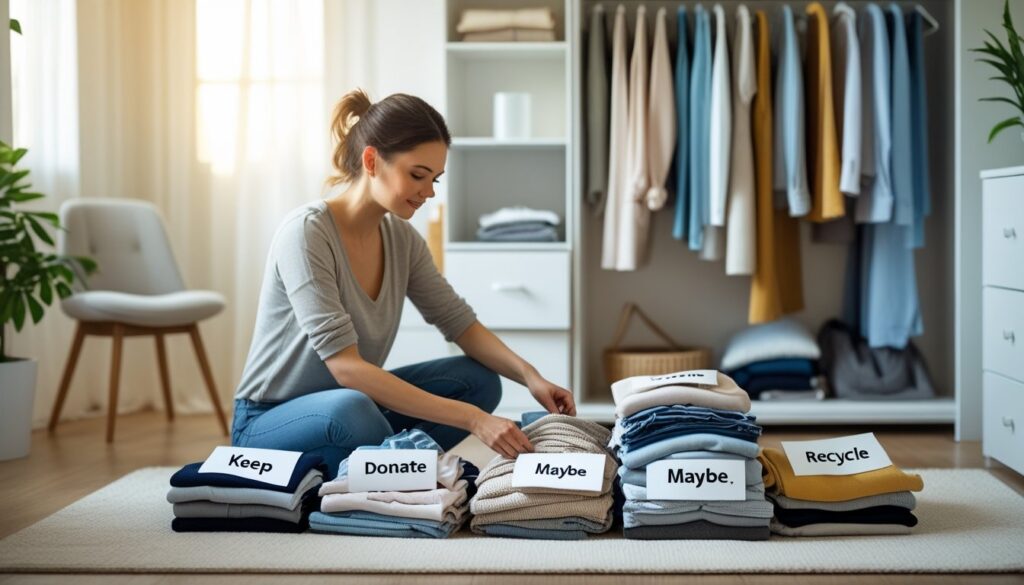
3. Implement the “Maybe Box” Strategy
For items you are unsure about:
- Place them in a box labeled “Maybe.”
- Revisit the box in 1–2 months
- If untouched, donate or sell
This prevents emotional hoarding while still giving you time to make thoughtful decisions.
4. Donate, Sell, or Recycle
Decluttering responsibly benefits both you and others. Options include:
- Donating to Goodwill
- Selling via the best apps to sell clothes
- Recycling worn-out pieces
5. Maintain Mindfulness
Decluttering is easier when you stay mindful:
- Avoid rushing
- Focus on your current needs, not the past
- Celebrate the sense of space and control
Using these tips, women not only simplify their wardrobes but also develop a more intentional, minimalist approach to fashion. For further guidance, explore minimalist shopping habits.

11. How Decluttering Clothes Supports a Minimalist Wardrobe
Decluttering clothes is the first and most important step toward building a minimalist wardrobe. Without removing the excess, it’s impossible to create a closet that is functional, stylish, and intentional.
1. Understand Your True Style
Decluttering reveals the patterns of what you actually wear. When you remove items you rarely use, you start to notice:
- r favorite colors and fabrics
- The clothing styles that feel best on your body
- Your lifestyle needs (work, casual, seasonal)
This awareness helps you make better wardrobe decisions and prevents unnecessary purchases.
2. Prevent Wardrobe Overload
A decluttered closet prevents accumulation and chaos. Benefits include:
- Fewer duplicates
- Easier outfit combinations
- Less stress when getting dressed
3. Promote Intentional Fashion Choices
Minimalist wardrobes are built around versatility and quality. After decluttering, you are more likely to:
- Invest in pieces that last longer
- Mix and match items effectively
- Shop with purpose rather than impulse
Decluttering is not the end—it is the foundation that makes minimalist fashion achievable, sustainable, and stress-free.
12. Common Mistakes Women Make While Decluttering Clothes
Even with the best intentions, decluttering clothes can go wrong if approached incorrectly. Being aware of common mistakes helps you avoid frustration and make the process effective.
1. Decluttering Too Quickly
Rushing through your wardrobe may lead to poor decisions, like discarding items you actually wear. Take your time:
- Sort by category (tops, bottoms, outerwear, accessories)
- Try items on to ensure proper fit
- Pause if you feel overwhelmed
2. Holding Clothes Out of Guilt
Many women keep clothing they don’t wear simply because of:
- Money spent
- Gifts from loved ones
- Emotional attachments
Holding onto these items creates clutter and stress. Instead, consider donating or reselling through apps to sell clothes to give them a new purpose.
3. Comparing Your Wardrobe to Others
Decluttering is personal. Comparing yourself to friends, social media, or celebrities can lead to keeping unnecessary items or over-purging. Focus on your lifestyle, body, and preferences. Because everyone’s styles and needs are different.
4. Expecting Perfection
Minimalist wardrobes are about function and intention, not an exact number of pieces. Avoid obsessing over achieving a “perfect” closet.
5. Not Planning for Rebuilding
Decluttering is only the first step. Without a plan to rebuild thoughtfully, you risk shopping impulsively or replacing clutter with more clutter.
By avoiding these mistakes, decluttering becomes a positive experience that creates clarity, confidence, and a minimalist wardrobe that truly supports your life.

Final Thoughts: How Decluttering Clothes Can Transform Your Lifestyle
Decluttering clothes is more than tidying a closet—it is a lifestyle choice that can transform your daily routine, mindset, and overall well-being. When approached thoughtfully, it creates clarity, reduces stress, and helps you build a minimalist wardrobe that truly supports your life.
Once your closet is decluttered, rebuilding intentionally makes all the difference:
- Focus on versatile, quality pieces
- Shop with purpose rather than impulse
Explore guides like the minimalist business wardrobe and the summer minimalist wardrobe for women
Frequently Asked Questions (FAQs) About Decluttering Clothes
1. How can decluttering my clothes improve my daily life?
Decluttering clothes does more than tidy your closet—it reduces stress, saves time in the mornings, and makes getting dressed easier. It also helps you understand your personal style, boosts confidence, and lays the foundation for a minimalist wardrobe.
2. In what ways does clearing out clothes benefit my mental health?
Removing unnecessary clothes can improve focus and reduce decision fatigue. When your wardrobe only contains items you actually wear and enjoy, your mind experiences less visual clutter, making your mornings calmer and more intentional.
3. Can decluttering clothes have any emotional or spiritual impact?
Yes! Letting go of old or unused clothing can create a sense of freedom, help you release emotional attachments, and encourage mindfulness. It allows you to focus on your present lifestyle and feel more aligned with your current self.
4. How do I decide which clothes to sell and which to keep?
A simple rule is to ask if you’ve worn the item in the last year, if it fits your current lifestyle, and if it makes you feel confident. If the answer is no, it’s likely a good candidate to sell.
5. What practical steps make decluttering clothes easier?
Some apps do, while others don’t. Poshmark and Mercari charge seller fees, while Vinted does not charge sellers at all. ThredUp charges through service fees and clean-out kits instead of per-item listings. Some helpful decluttering clothes tips include:
- Sorting by category (tops, bottoms, outerwear, accessories)
- Trying items on to see if they still fit your style and lifestyle
- Using a “maybe box” for uncertain items
- Donating or selling pieces responsibly
For more detailed guidance, check out minimalist shopping habits.
6. Is it really worth decluttering my wardrobe?
Absolutely. Decluttering clothes saves mental space, reduces stress, and helps you shop and dress more intentionally. It also supports sustainable fashion through donation or resale.
7. What exactly is the 50% rule in decluttering, and does it work?
The 50% rule encourages removing roughly half of your wardrobe to simplify choices and highlight essential pieces. For a gentler approach, the 70/30 rule keeps 70% of everyday items and 30% for occasional or seasonal use. Learn more here: master the 70/30 rule for a minimalist wardrobe.
8. How does the golden rule of decluttering help make decisions easier?
The golden rule is simple: “If it doesn’t serve your current life, let it go.” Following this guideline makes it easier to let go of unnecessary items, reduces wardrobe clutter, and keeps your closet practical and intentional.